
The machine for when the whole house has to stay on
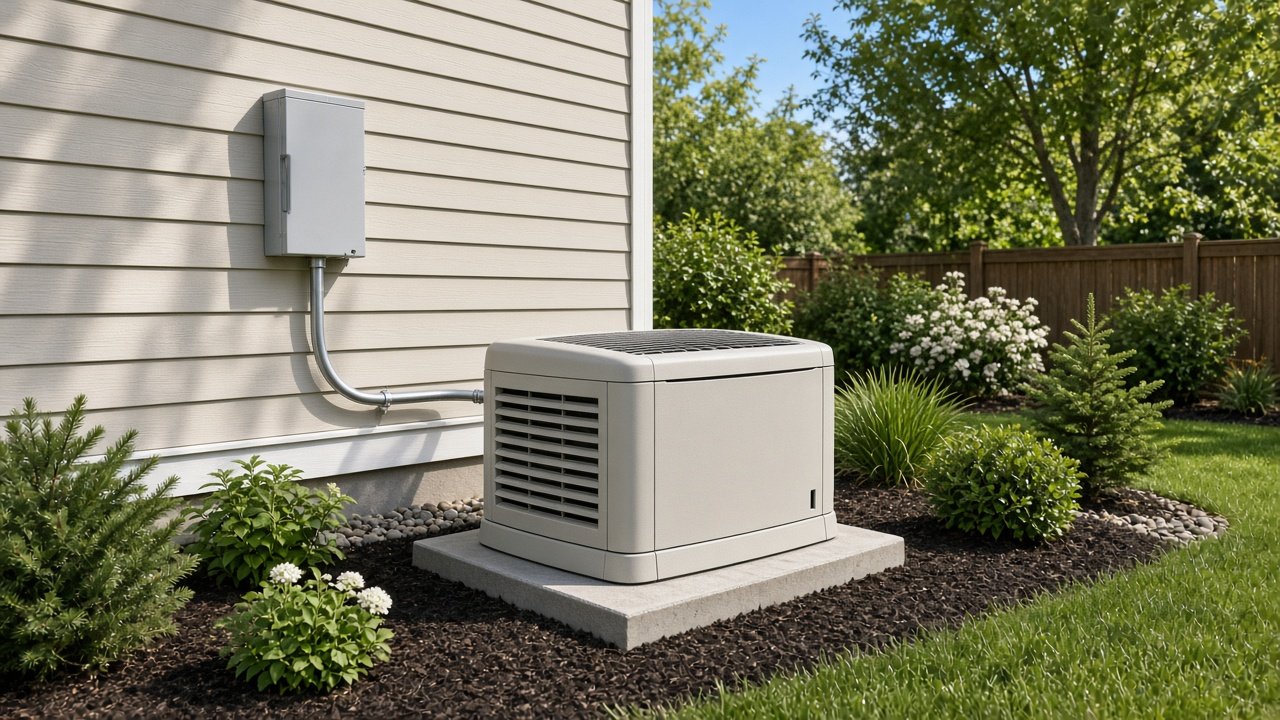
Furnace, well pump, sump, freezer. Maybe a whole winter of them. A standby generator is the answer when the outage lasts days and the house can’t take the night off. It’s also, fair warning, a small construction project with a motor attached, and we’ll walk you through it the way a neighbor would rather than the way a dealer does.

The short version
- This category helps you sort the whole-house generator decision like a neighbor would: automatic standby versus a portable in the driveway, air-cooled versus liquid-cooled, and the honest all-in cost after gas, pad, and permit.
- No ranked trophy models and no fake buy buttons.
- Just the thinking that keeps a five-figure decision calm.
Let’s be upfront about something unusual for an affiliate site: nobody here earns a penny if you buy a standby generator. Our featured partners (Jackery, BLUETTI, and Anker SOLIX) make batteries, not pad machines, and we won’t invent a Generac link or a fake dealer coupon to pretend otherwise. That turns out to be good news for you. This category exists purely so the advice is complete, which means the only thing we’re selling here is a clear head: which class of machine fits your house, what the install really costs, and when the honest answer is “you don’t need one.”
Start here
No buy buttons on this one, because nobody here earns a penny when you buy a generator. These three pages are the whole decision.
-
 Pick a class, not a badge
The standby classes, sorted by job
Air-cooled, liquid-cooled, or portable plus an inlet
Read it
Pick a class, not a badge
The standby classes, sorted by job
Air-cooled, liquid-cooled, or portable plus an inlet
Read it
-
 Before you take a quote
What a whole-house install really costs
The pad, the gas run, the switch, the permit
Read it
Before you take a quote
What a whole-house install really costs
The pad, the gas run, the switch, the permit
Read it
-
 If you are still torn
Standby or a portable in the driveway
Really a question of who does the 2 a.m. work
Read it
If you are still torn
Standby or a portable in the driveway
Really a question of who does the 2 a.m. work
Read it
Start with your list, not a brand. If the things you refuse to lose include 240-volt loads that have to run for days, meaning the well, the heat, a sump standing guard over a finished basement, then this category is yours, and the pages below walk it in order. If your honest list is a fridge and a router, put the tape measure down. A power station covers that for a tenth of the money, and the battery-or-generator page will referee if you’re torn.
How we judged these
- The load list, before the badge. A 10 kW machine can honestly be “whole house” if the air conditioner sits the storm out. A 22 kW one can still stumble on an unmeasured heat pump.
- Fuel that survives the same storm. A gas main under a street usually keeps running after the wires above it come down. Gasoline belongs to portables you stand beside.
- All-in cost, not unit cost. The pad, the gas run, the transfer switch and the permit routinely outweigh the machine. Any number that leaves them out is a sales figure.
- Someone who will maintain it. An unexercised standby is the most expensive lawn ornament on the street, and we would rather you knew that before the concrete.
This category fits you if
- Your house has 240-volt loads a battery can’t reach: a well, some air handlers, a dryer you genuinely need.
- Winter outages run multiple days, and the gas or propane keeps flowing after the power lines quit.
- Someone in the house depends on medical gear, mobility equipment, or a sump. Those loads can’t wait for a person to wade out at 2 a.m.
- You’ll treat the machine like the small engine it is: exercise runs, oil, a service visit. It repays the attention.
Skip it if
- You rent, the lot is tight, or the HOA fights outdoor equipment. Settle that before anybody pours concrete.
- Your real budget is $1–3k all-in. That’s a lovely power station budget, and there’s no shame in it.
- You were actually shopping a roof-tied wall pack. Tesla Powerwall lives on a different site than this one.
- Nobody will maintain an engine. An unexercised standby is the most expensive lawn ornament on the street.
Where the money lives (and doesn’t)
Jackery, BLUETTI, and Anker SOLIX don’t sell standby generators, so nothing in this category carries a buy button. Their shops (Jackery, BLUETTI, Anker SOLIX) appear on the battery and station pages, where they belong. The full arrangement: affiliate disclosure. How we decide anything: how we review.
What “whole house” actually means
Dealers say “whole house” to soothe you. Electricians mean something you can walk out back and point at. There’s a transfer switch that moves your home onto the generator when the grid drops, and an engine sized for the loads you refuse to give up. Here’s the comforting part: a 10 kW air-cooled machine can honestly be “whole house” if the air conditioner sits the storm out. A 22 kW unit can still stumble on a heat pump nobody measured. The nameplate is a starting point, not a promise that the outdoor unit spins on a January morning. Getting this right is mostly a matter of writing an honest list, and the buying guide holds your hand through it.
Fuel is part of the machine, too. Natural gas is the set-and-forget choice, and in many wind storms the gas main keeps humming under a street where the power lines came down. Propane is fuel you own outright: a tank in the yard with a gauge you can read from the kitchen window. Gasoline belongs with portables you stand next to, never with a pad machine you expect to wake itself. And placement sinks more “perfect” quotes than price ever does: noise rules, clearances, the inspector’s tape measure. We’re writers, not your inspector. The local folks with clipboards get the last word, and the about page says so plainly.
Everything in this category
 The standby classes, sorted by job
Air-cooled, liquid-cooled, or portable-plus-inlet. Buy a class of machine, not a badge.
The standby classes, sorted by job
Air-cooled, liquid-cooled, or portable-plus-inlet. Buy a class of machine, not a badge.
 Standby vs portable
Really a question of who does the 2 a.m. work: an automatic switch, or you in the rain.
Standby vs portable
Really a question of who does the 2 a.m. work: an automatic switch, or you in the rain.
 The whole-house buying guide
Loads first, gas line second, brochure last. That order is what keeps a quote honest.
The whole-house buying guide
Loads first, gas line second, brochure last. That order is what keeps a quote honest.
 What it really costs
Equipment, install, and the years after. The whole invoice, held up to the light.
What it really costs
Equipment, install, and the years after. The whole invoice, held up to the light.
How this category connects to the rest of the house
Maybe, once the list is written, 8–12 kW of automatic gas power turns out to be more machine than your house needs. That happens a lot, and it’s a happy discovery. The gentler paths: home battery vs standby generator weighs the physics, and the split-phase battery we actually name is the Anker SOLIX F3800, which is a cabinet on casters, not a pad machine. If the job is really just essentials for some hours, that’s power stations for home backup. And if a local code detail on any page here doesn’t match your town, tell us. We’d genuinely like to fix it.
Tonight’s homework is small and worth doing: write down what has to stay on, and give the 240-volt loads their own line. Tomorrow, open the page that matches the list.