
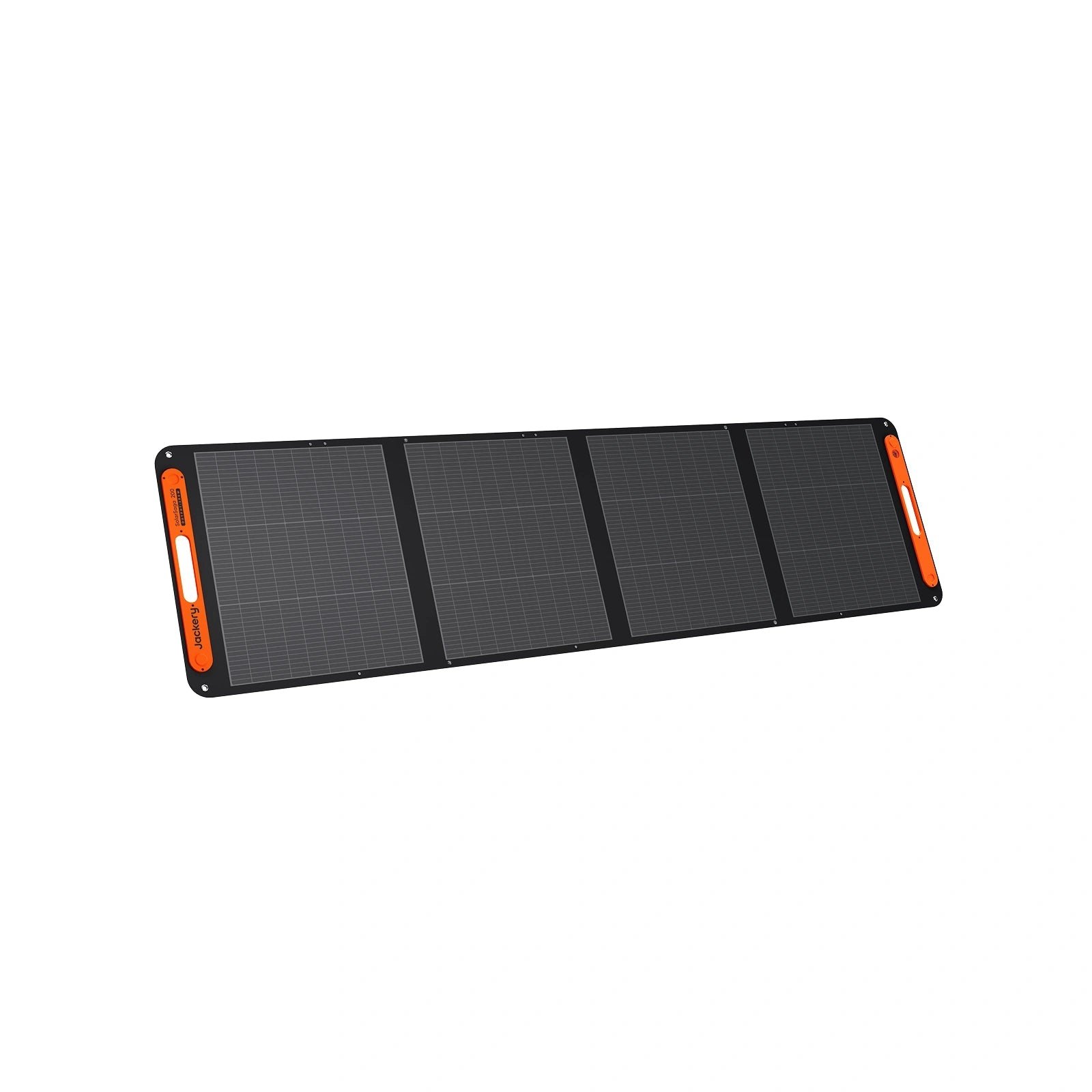
Best overall
Jackery SolarSaga 200W
200 W · 14.33 lb · IP68
$379 $429
Price checked Aug 26, 2026
A portable panel is the refill half of a battery plan: unfold it with your morning coffee, aim it at the sun, and watch the station’s number climb while the grid figures itself out. It’s a way to buy back daylight, one afternoon at a time.

Method: how we pick · disclosure. Spec-based unless a photo of the unit in our hands is shown.
Affiliate disclosure: Some links below are affiliate hops. If you buy after clicking, The Home Backup may earn a commission at no extra cost to you.
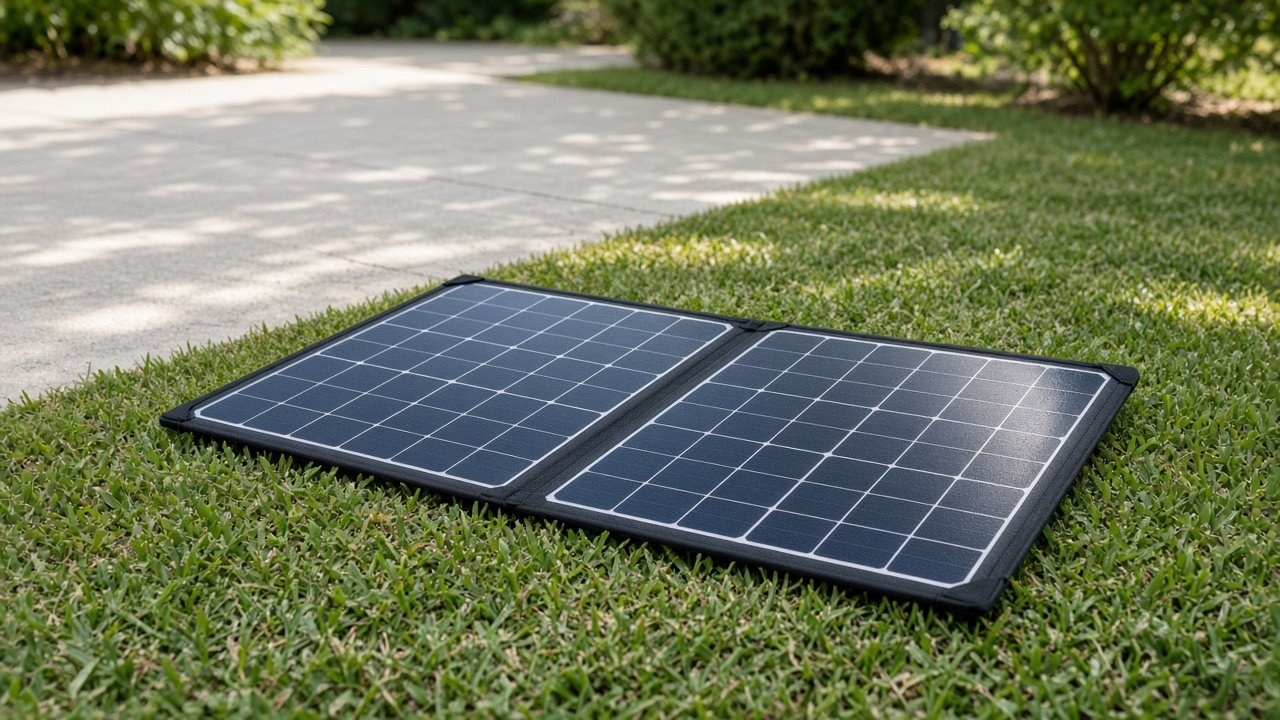
Here’s the picture. Your power station is a tank, call it 2,000 watt-hours, and daylight is how you refill it when the wall can’t. A folding panel does exactly that from a driveway: unfold, prop the kickstands, turn it toward the sun a couple of times before lunch, and fold it up before the weather turns. That’s the whole product, and on a sunny outage day it feels a little like magic.
The short answer, if you only have a minute. Every price below carries the day we checked it.
Best overall
Jackery SolarSaga 200W
$379 Price checked Aug 26, 2026
See Jackery SolarSaga 200W on Jackery.com, opens in a new tab
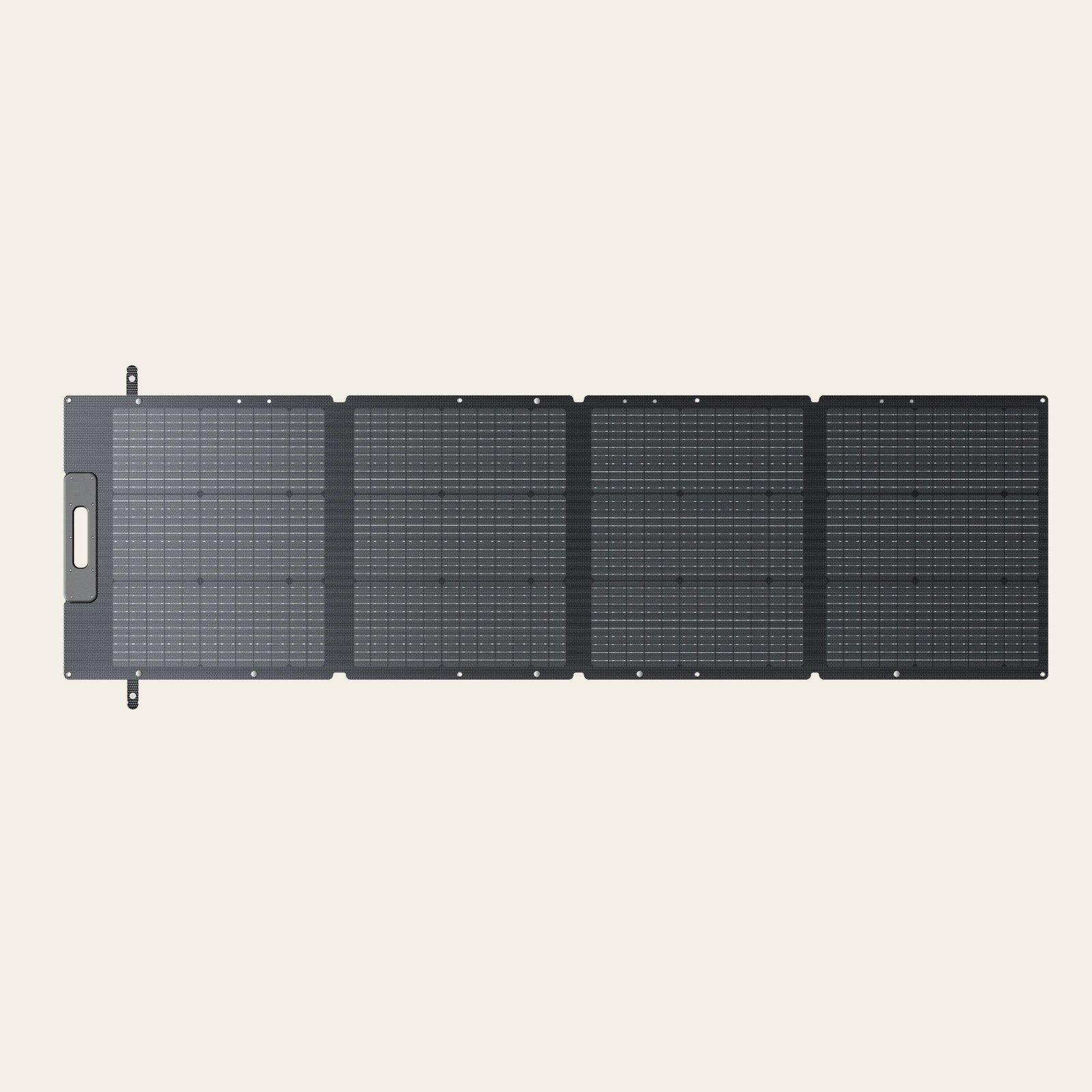 Best for BLUETTI owners
BLUETTI 200W Portable Solar Panel (SP200L)
$399 Price checked Aug 26, 2026
See BLUETTI 200W Portable Solar Panel (SP200L) on bluettipower.com, opens in a new tab
Best for BLUETTI owners
BLUETTI 200W Portable Solar Panel (SP200L)
$399 Price checked Aug 26, 2026
See BLUETTI 200W Portable Solar Panel (SP200L) on bluettipower.com, opens in a new tab
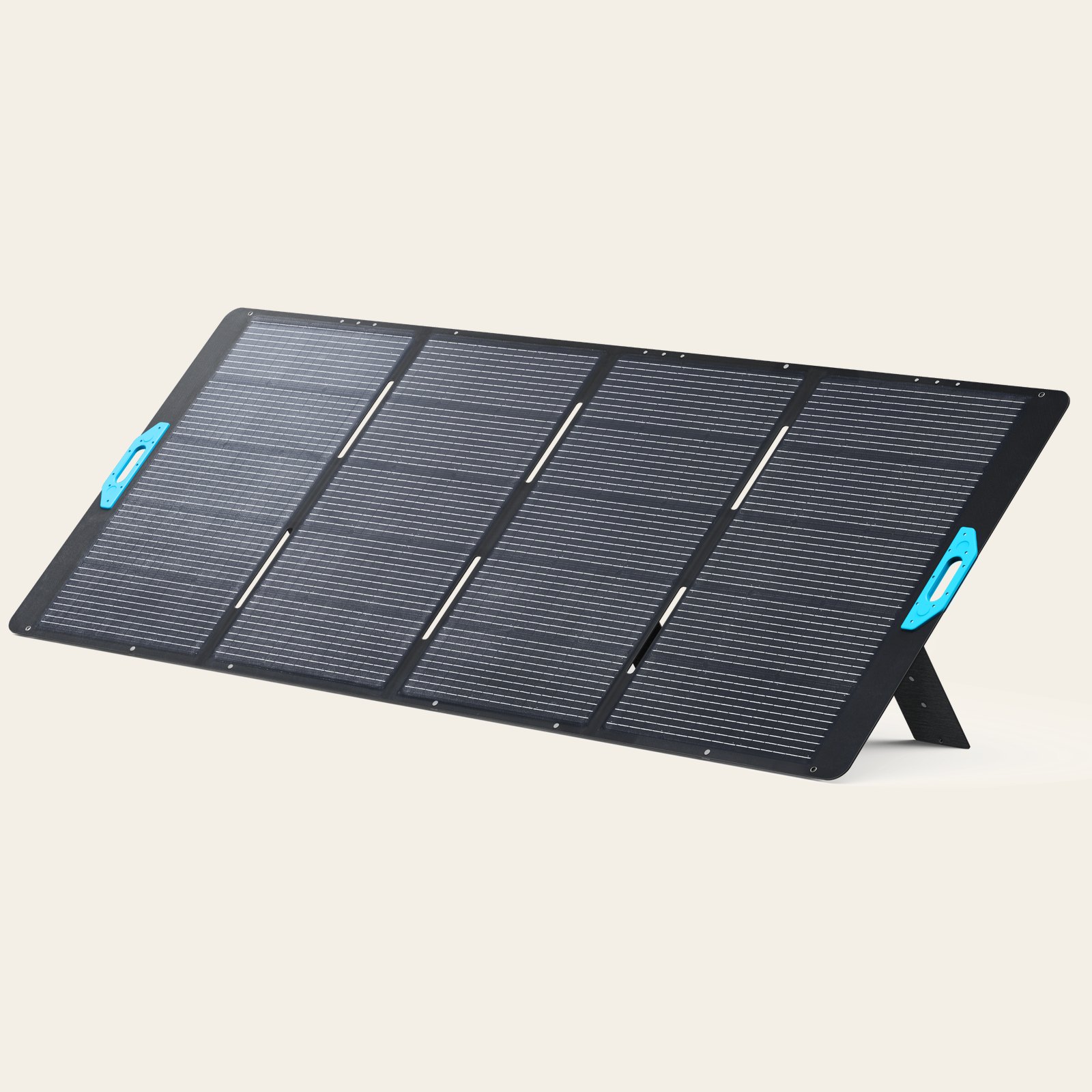 Most watts
Anker SOLIX PS400
$699.99 Price checked Aug 26, 2026
See Anker SOLIX PS400 on ankersolix.com, opens in a new tab
Most watts
Anker SOLIX PS400
$699.99 Price checked Aug 26, 2026
See Anker SOLIX PS400 on ankersolix.com, opens in a new tab
Two honest boundaries keep the magic from curdling. Night puts back nothing. A four-hour evening outage is a battery problem, not a panel problem. And clouds take their cut without negotiating. Where panels genuinely earn their price is the multi-day event with decent sun: the battery carries the nights, the panel buys back the days, and the fridge never learns the grid was gone.
One panel per family, each with the maker’s own photo and specs dated August 26, 2026. A gentle heads-up on the voltage column: the SP200L prints its open-circuit voltage plainly (24.6 V), while the SolarSaga 200W and PS400 pages never settle on one figure, so we leave those cells empty, because we’d rather hand you a blank than a guess. Jackery does print IP68 on the SolarSaga, and Anker IP67 on the PS400. BLUETTI’s sealing rating never comes through clean, so that one’s empty too.
3 models in this category
200 W · 14.33 lb · IP68
$379 $429
Price checked Aug 26, 2026
200 W · 17.15 lb · 24.6 V
$399
Price checked Aug 26, 2026
400 W · 35.3 lb · IP67
$699.99
Price checked Aug 26, 2026
Product photographs are the manufacturers’ own studio shots, used as supplied. Specifications and prices come from their US product pages, checked August 26, 2026.
| Model | Rated output | Weight | Weather sealing | Price |
|---|---|---|---|---|
| SolarSaga 200W, opens in a new tab Jackery | 200 W | 14.33 lb | IP68 | $379 |
| 200W Portable Solar Panel, opens in a new tab BLUETTI | 200 W | 17.15 lb | $399 | |
| PS400, opens in a new tab Anker SOLIX | 400 W | 35.3 lb | IP67 | $699.99 |
Rigid roof and ground-mount panels. Cheaper per watt, better over ten years, and completely wrong for this job. They want mounting, wiring, and usually a permit, which is a different project with a different tradesman standing in your driveway.
Hard-shell briefcase kits. They stand up better in wind and pack a controller in the case. We name none of them here because no manufacturer we work with supplied a clean product photograph, and we won’t review from a render. The shape comparison is at folding vs briefcase.
100-watt single folders. Light, cheap, and honest about what they are. They put back so little in a day that most buyers end up ordering a second one by Christmas, at which point the 200-watt panel was the cheaper purchase all along.
Stay in the family when you can: SolarSaga into Jackery, SP200L into BLUETTI, PS400 into Anker SOLIX. Then the cable just clicks. The shops: Jackery, BLUETTI, Anker SOLIX. Same price to you either way. Disclosure.
The two 200-watt folders are the natural partners for a ~2 kWh station: light enough for one person, sized for a real dent in the tank by mid-afternoon. The PS400 is the ambitious one: twice the daylight on paper, 35.3 pounds in your hands, and worth it only if your station’s solar input can actually accept 400 watts. Check that window before you buy the bigger glass. It takes two minutes and spares a lot of buyer’s remorse.
The wattage on the box is a lab number: perfect light, perfect temperature, no leaves. A wet November driveway is not that lab, and that’s fine once you expect it: plan on a good-day yield of somewhere around half to a full kilowatt-hour from a 200-watt folder, and let a bright June noon surprise you kindly. Shade creeping over one corner can drag down the whole panel, kickstands skate on wet concrete, and a charge through a closed window is a demo, not a plan.
products.json — blanks stay blank where the maker never printed a clean figure.This hub routes to panels and guides. Specs on child pages are maker-page figures unless a child page shows hands-on photos. No SVG styled as a product shot on money children. disclosure · how we review.
We don’t feature no-name 400-watt blankets that would over-volt a small input. There’s no briefcase-style panel in our catalog because no maker gave us a clean official photo of one, so that format gets an honest format guide instead of an invented model. Method: how we review.
The stations these panels refill live at portable power stations, and a home battery will happily drink from a panel too. Tonight’s small kindness to your future self: find your station’s solar input numbers and write them inside a kitchen cupboard door. The sunny morning they matter, you’ll know exactly where they are.