
Anker SOLIX PS400: spec-and-fit analysis (not a hands-on review)
Spec-and-fit analysis. We have not handled this panel in our shop. The sticker on the Anker SOLIX PS400 says 400 watts, double the other folders here. The handle says 35.3 pounds, which is the number that actually decides this purchase. Buy it for an Anker station whose input can drink 400 watts, and buy it for somebody who means to carry it. That somebody might genuinely be you. This page helps you find out before the checkout does.
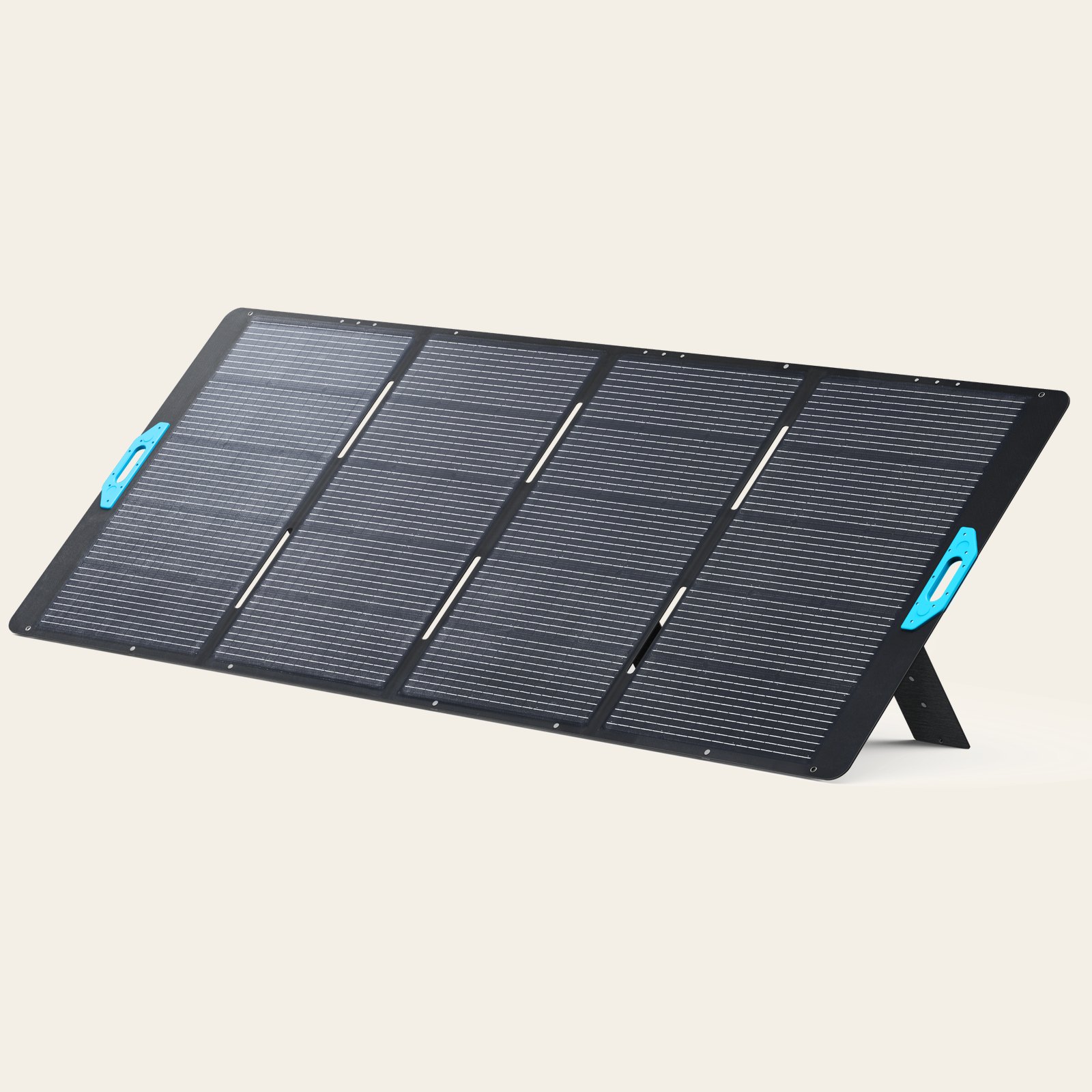

The short version
- The Anker SOLIX PS400 is the 400-watt folding panel in our catalog, and the figure that decides the purchase is 35.3 pounds, not the wattage.
- Sealing is a printed IP67 and the price was $699.99 on August 26, 2026; the open-circuit voltage is a dash, because Anker's pages never agree on one.
- Weigh both numbers against your station's solar input and the carry you'll actually make.
Method: how we pick · disclosure. Spec-based unless a photo of the unit in our hands is shown.
Affiliate disclosure: Some links below are affiliate hops. If you buy after clicking, The Home Backup may earn a commission at no extra cost to you. Full notes: disclosure.
Most watts
Anker SOLIX PS400
Twice the daylight of a 200-watt folder, if you are honest about carrying 35 pounds to the driveway.
$699.99
Price checked Aug 26, 2026
Two figures run this page, and they pull in opposite directions: 400 watts of nameplate daylight, and 35.3 pounds of packed reality. The rest, as Anker lists it on August 26, 2026: sealed to IP67, $699.99 with no strikethrough beside it. It’s the big folder of our three. Not a roof, not a briefcase, and not quite the same kind of “portable” as a 14-pound SolarSaga, whatever the shared adjective suggests.
Who this fits
- You’re an Anker home, running the C2000 Gen 2 or the F3800, and you’ll confirm the station’s solar window first, the way the label asks.
- You’ve walked the real route to the driveway with 35 pounds in mind and made peace with it, not once in a product video but as a habit.
- A 200-watt folder genuinely undershoots your daylight needs, and you know 400 still bows to haze.
- You want a sealing rating quoted from the maker: IP67, in writing.
Who should skip
- 35.3 pounds is a no, and it’s allowed to be a no. A 200-watt folder, or just more watt-hours, will serve you better than a trophy leaning in the garage.
- Your station’s solar input tops out well under 400 watts. Past that ceiling, the extra glass is just exercise.
- Your station is a Jackery or a BLUETTI. The SolarSaga or the SP200L keeps the cables matched.
- Your outages are short and after sunset, when every panel on earth produces the same zero.
How we know: Specification analysis.
Price check: anker-solix-ps400: $699.99 (checked 2026-08-26) (2026-08-26) — from merchant page / products.json; may change.
Limits: We did not run a hands-on lab on these units. Surge blanks stay blank where the maker never prints one clean figure. EcoFlow stays comparison-only (no hop). Disclosure mode is dormant — we do not claim commissions.
400 watts versus real sun, and 35.3 pounds
On paper this is twice the SolarSaga. In a driveway, the multiplier is weather. Aim it well under good June sun and the midday intake genuinely outruns any 200-watt folio. That’s the happy case, and it’s real. Winter haze pays a fraction, and the 35.3-pound carry costs exactly the same either way. Not a complaint, just the shape of the purchase: you buy the good days at full price, and the gray ones come bundled.
The weight deserves its own honest paragraph. It’s 21 pounds more than the SolarSaga and 18 more than the SP200L. A two-hand carry that stairs will lengthen and gusts will test, because those kickstands are bracing a bigger sail. The telling detail: when the wind does win, 35.3 pounds is both the ballast that resisted and the object now sliding across your driveway, so supervision isn’t optional equipment. IP67 covers water and dust, as printed. Hail and theft remain, as ever, your department.
Price that day: $699.99. See tonight’s price at Anker →. Same price to you either way, disclosure here.
- Read the solar window on the station you actually own. The C2000 Gen 2 and the F3800 each list their own maximum watts and voltage.
- Walk the closet-to-driveway route with 35.3 pounds in your head. If the route says no, believe it and buy lighter.
- Don’t invent a voltage to justify series cables. The dash in our table is there because Anker never prints one.
- Aim, supervise, fold. A big folio is simply more panel to rescue when a gust wins.
The voltage we won’t guess
The PS400’s open-circuit voltage is a dash in our tables. Anker’s pages never settle on one figure, the same trouble Jackery has with the SolarSaga. (The SP200L is the folder in this category whose maker writes it down: 24.6 V.) A dash is an instruction, not a guess of “probably around 40.” Read the live page, and if you still can’t find a number you trust, don’t series-wire. Full stop. Cold, bright mornings push voltage up, and charge-controller maximums are not suggestions.
The watt ceiling is the other half of the homework: if your station’s input clips below 400 watts, some of this glass will simply never be asked to work, and you’ll have paid full price for the idle half. Two minutes with the live page settles it. The complete lecture: the panel buying guide. Size the tank side with the load calculator.
Twice the daylight of the 200-watt folders, for the Anker home that checks its solar window first and carries 35.3 pounds on purpose.
Fit table: which stations it pairs with
Stay in the Anker SOLIX cable family. Confirm the live solar input window (watts and voltage) on the station you own before you series-wire anything. Voc on the PS400 stays a dash in our tables where Anker’s pages conflict — we do not invent one.
| Station | Connector / family | Homework | Real-world derate note |
|---|---|---|---|
| Anker SOLIX C2000 Gen 2 | Anker SOLIX portable solar | Read C2000 solar watt + voltage window; shop hop | Winter haze and poor aim can cut intake to a fraction of 400 W |
| Anker SOLIX F3800 | Anker SOLIX portable solar | Read F3800 solar window; larger tank needs more daylight hours | One PS400 will not refill 3,840 Wh by dinner in weak sun |
| Jackery / BLUETTI stations | Not the matched family | Prefer SolarSaga or SP200L | Cross-family adapters are your risk; we do not recommend them here |
Pairing it with the Anker machines
In-family is the point. The C2000 Gen 2 is the light 120-volt station (2,048 Wh, 2,400 W, 41.7 lb). The F3800 is the split-phase cabinet (3,840 Wh, 6,000 W, 132.3 lb). Both take portable solar. Neither forgives a guessed voltage, and neither one turns this folio into a roof.
Scale the expectation to the tank: the F3800 holds 3,840 Wh, and one PS400 in poor sun won’t refill it by dinner. Winter pace is the product doing its job. More panels mean more 35-pound carries and more voltage arithmetic, and if the honest requirement is multi-day winter runtime with no sun at all, the grown-up comparison is battery vs standby, not a bigger blanket.
- 400 W of daylight · 35.3 lb · IP67 · $699.99 (August 26, 2026).
- Voltage: a dash. Confirm it live, and never series-wire on a guess.
- Made for Anker SOLIX inputs, after you’ve read the watt window.
- Twice the sticker of a 200-watt folder is not twice the January kilowatt-hours.
- If you won’t carry 35.3 pounds, that’s an answer, and a fine one. Buy lighter.
Sources
- Anker SOLIX US product pages for PS400 nameplate watts, weight, IP67, and street price (dated checks on this page).
- Paired-station solar input windows: Anker SOLIX C2000 Gen 2 and F3800 US pages (confirm live before series-wiring).
- Price band also mirrored in
products.jsonas of the dated check — we do not invent a cart sticker.
How we evaluated this (and what we did not do)
This page is a spec-and-fit analysis, not a hands-on review. We have not measured output on our bench. Nameplate watts, weight, IP rating, and price come from Anker’s US pages on the dated checks. Hero image is the manufacturer product photo with credit implied by use-as-supplied; not an SVG fake and not an AI render. disclosure · how we review.
What we’re not claiming
No controlled year of yield logging behind this page, and there’s still no named briefcase panel here. That format gets an honest discussion at folding vs briefcase. Method: how we work · the shop: Anker SOLIX.
If the carry has to stay under 20 pounds, buy a 200-watt folder. If your station’s input clips below 400 watts, keep your money. A Jackery or BLUETTI home should stay in its own family. But for the Anker household with the sun, the station, and the shoulders, this is the big folder. Shortlist: the panels worth unfolding · the category: portable solar panels · the F3800 story: Anker SOLIX F3800 · corrections: contact.