
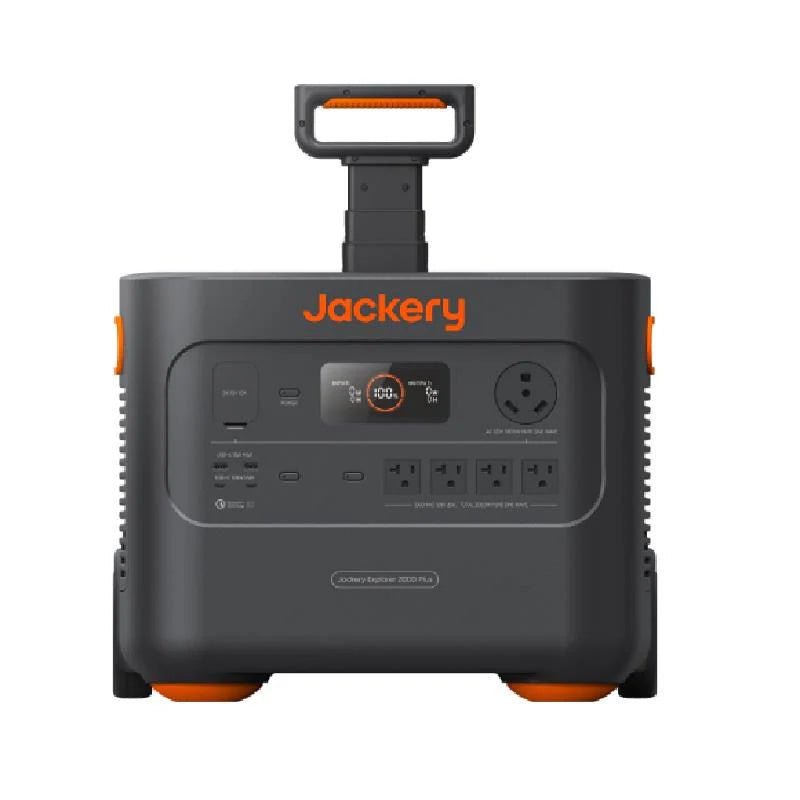
Best overall
Jackery Explorer 2000 Plus
2,042.8 Wh · 3,000 W · LiFePO4
$1,429 kit (out of stock)
Price checked Sep 30, 2026
All three hold about two nights of fridge, so there’s no single trophy here, just three good machines and the households each one actually suits. One brings inverter headroom, one brings room to grow, one brings a carry your back will notice. Find your house below and the choice makes itself.
 Best overall
Jackery Explorer 2000 Plus
$1,429 kit (out of stock) Price checked Sep 30, 2026
See Jackery Explorer 2000 Plus kit on Jackery.com (check restock), opens in a new tab
Best overall
Jackery Explorer 2000 Plus
$1,429 kit (out of stock) Price checked Sep 30, 2026
See Jackery Explorer 2000 Plus kit on Jackery.com (check restock), opens in a new tab
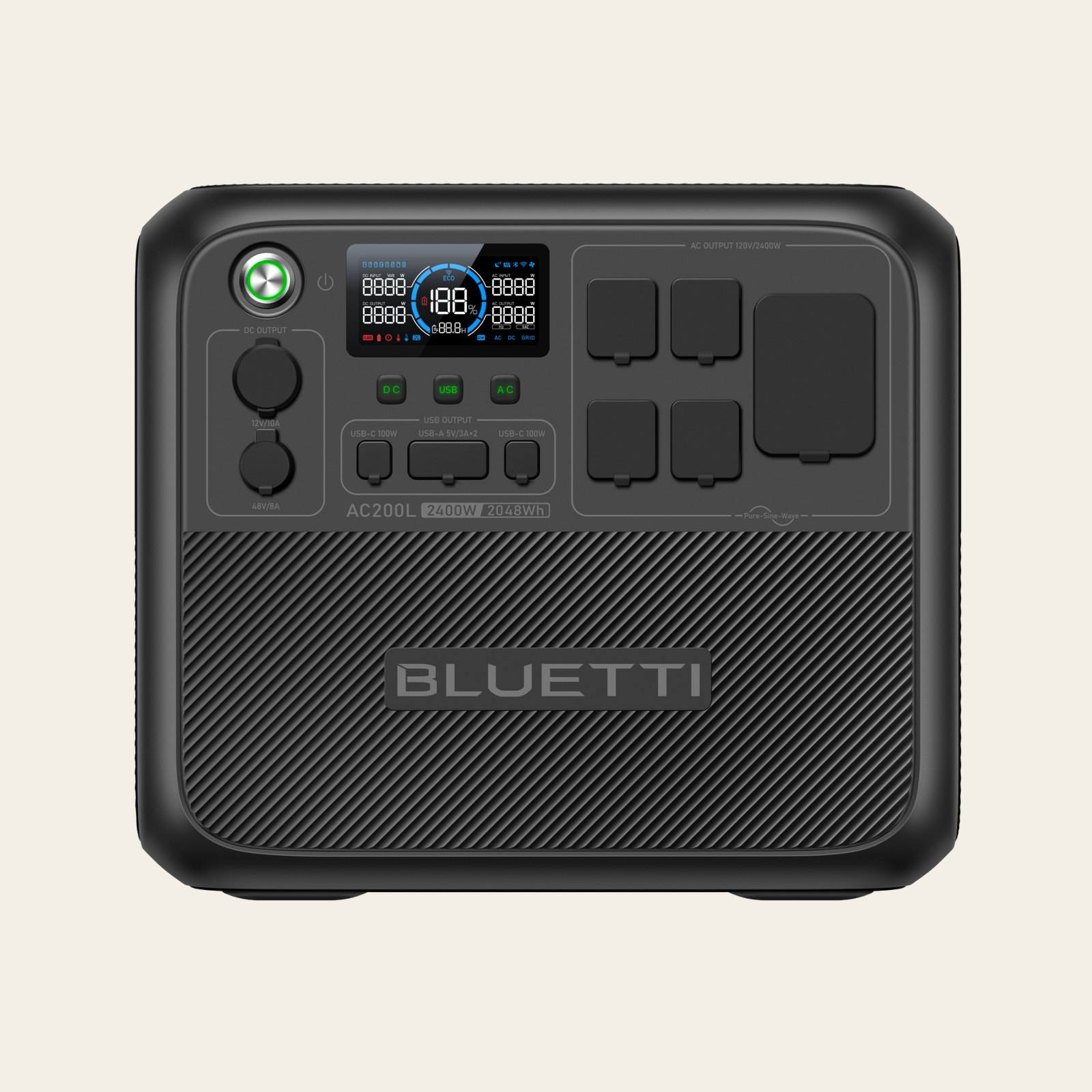 Most expandable
BLUETTI AC200L
$899 Price checked Sep 30, 2026
See BLUETTI AC200L on bluettipower.com, opens in a new tab
Most expandable
BLUETTI AC200L
$899 Price checked Sep 30, 2026
See BLUETTI AC200L on bluettipower.com, opens in a new tab
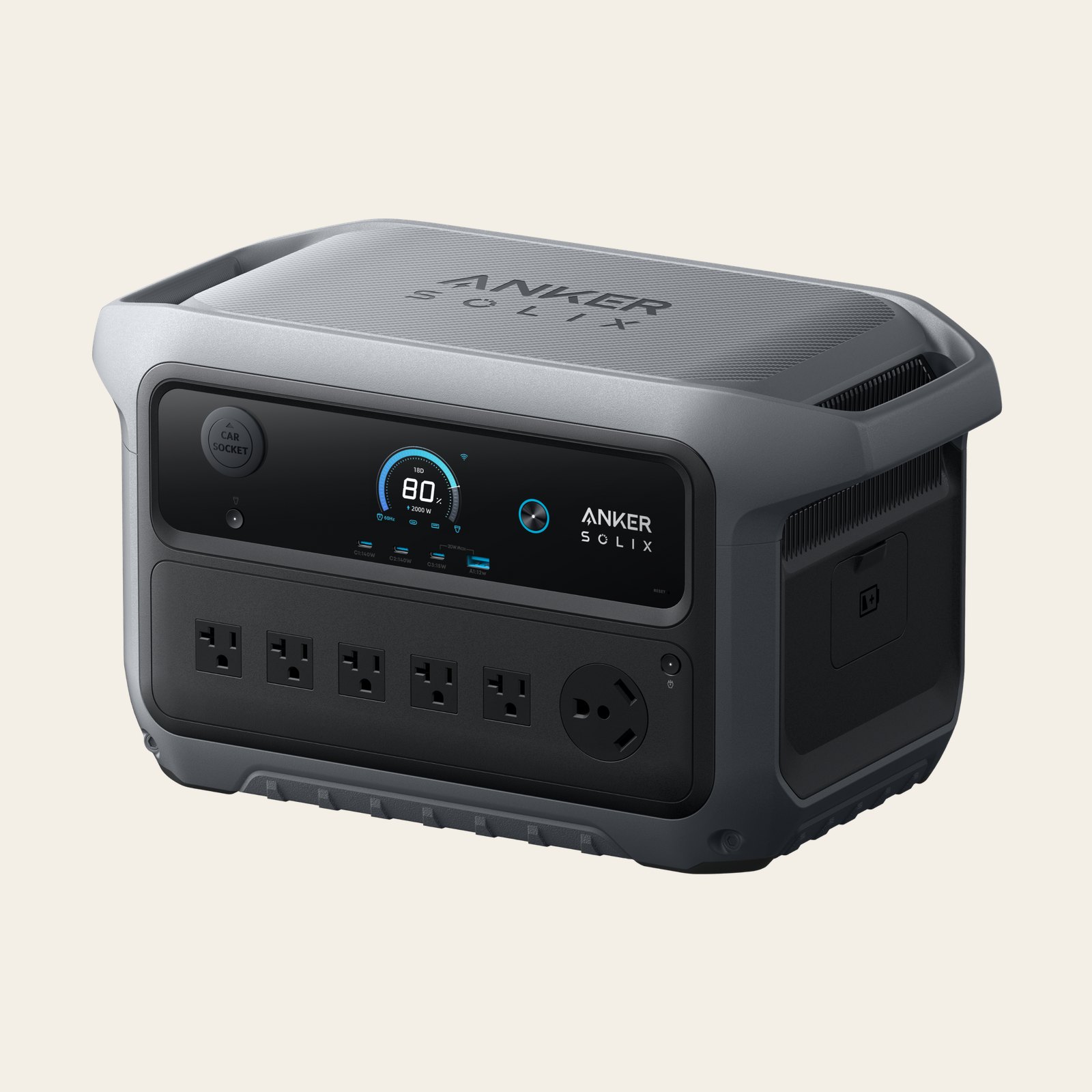 Lightest to carry
Anker SOLIX C2000 Gen 2
$899.99 Price checked Sep 30, 2026
See Anker SOLIX C2000 Gen 2 on ankersolix.com, opens in a new tab
Lightest to carry
Anker SOLIX C2000 Gen 2
$899.99 Price checked Sep 30, 2026
See Anker SOLIX C2000 Gen 2 on ankersolix.com, opens in a new tab
Method: how we pick · disclosure. Prices carry the day we checked them.
| Job | Start with | Worked example |
|---|---|---|
| Fridge overnight (closed door) | Any of the three ~2 kWh tanks; Jackery if inverter headroom matters | fridge runtime |
| CPAP + router night | Anker C2000 Gen 2 if you carry; else AC200L | CPAP runtime |
| Sump pump intermittent | Confirm starting watts first; often not this class alone | sump-pump runtime |
| Whole-weekend outage (120 V list) | BLUETTI AC200L for printed expansion attic | load calculator |
A power station is a battery, an inverter, and a row of outlets. The marketing says “solar generator,” but the panel is optional and the battery is the whole point. The job on this page is specific: keep the refrigerator cycling, the internet up, the phones charged, a CPAP humming, and some lamps on through the first night and into the second. That is a real, common job. It is also not central air, an electric dryer, or a 240-volt well; those walk to their own categories.
The three machines are close on watt-hours and different everywhere else: weight, steady output, extra-battery futures, and whether the maker printed a surge number we could copy. Rankings here are job assignments, not medals. The method is at how we work, and the prices below are what the makers’ own US pages showed on August 26, 2026. Sales wander. Peek at the live cart before four figures leave your pocket.
3 models in this category
2,042.8 Wh · 3,000 W · LiFePO4
$1,429 kit (out of stock)
Price checked Sep 30, 2026
2,048 Wh · 2,400 W · LiFePO4
$899
Price checked Sep 30, 2026
2,048 Wh · 2,400 W · LFP
$899.99
Price checked Sep 30, 2026
Product photographs are the manufacturers’ own studio shots, used as supplied. Specifications and prices come from their US product pages, checked September 30, 2026.
One reading note: a blank cell in the surge column marks a number the maker never printed cleanly. We’d rather show you a quiet cell than a confident guess.
| Model | Rated capacity | Rated output | Weight | Price |
|---|---|---|---|---|
| Explorer 2000 Plus, opens in a new tab Jackery | 2,042.8 Wh | 3,000 W | 61.5 lb | $1,429 kit (out of stock) |
| AC200L, opens in a new tab BLUETTI | 2,048 Wh | 2,400 W | 62.4 lb | $899 |
| C2000 Gen 2, opens in a new tab Anker SOLIX | 2,048 Wh | 2,400 W | 41.7 lb | $899.99 |
The Jackery Explorer 2000 Plus is the muscle assignment: 2,042.8 Wh, 3,000 watts of steady output, 61.5 pounds, $1,429 for the kit with two SolarSaga 100W mini panels, checked September 30, 2026. Out of stock on jackery.com that day; no standalone unit is listed. Its 600 extra watts over the 2,400-watt pair is the whole pitch: a fridge and a microwave burst shouldn’t have to share a thin inverter, and here they don’t. Spec sheet says 3,000 W steady, checked August 26, 2026. Full notes: Explorer 2000 Plus.
Its surge cell is blank. Jackery’s page never settles on one figure, and a peak watt shouted by a third-party listing is not a spec. Owners keep saying a typical kitchen fridge starts on this inverter. Your own compressor, started once on a calm afternoon, is still the check that counts. The matched panel is the SolarSaga 200W, the lightest carry in the panel category.
See Jackery Explorer 2000 Plus kit on Jackery.com (check restock), opens in a new tab
Price checked Sep 30, 2026
The BLUETTI AC200L is the room-to-grow assignment: 2,048 Wh and 2,400 watts today, with a printed path to 8,192 Wh of modules tomorrow, the biggest 120-volt attic in the class. Same $899 that day on shop.bluettipower.com, no strikethrough shown, checked September 30, 2026. The main bluettipower.com product page lists Discontinued / unavailable. 62.4 pounds of park-it machine. Full notes: AC200L.
The asterisk rides along: every one of those future watt-hours is still 120 volts. A long outage of fridge, freezer, lights, and router is where the modular tank shines. A 240-volt well makes this the wrong category at any capacity. Surge is blank here too, same rule. The matched panel is the SP200L, whose 24.6-volt figure makes the wiring math finishable. The rules are in the panel guide.
See BLUETTI AC200L on bluettipower.com, opens in a new tab
Price checked Sep 30, 2026
The Anker SOLIX C2000 Gen 2 is the carry assignment: 2,048 Wh at 41.7 pounds, twenty lighter than its shelf-mates, with the class’s only printed peak (4,000 W) and growth to 4 kWh, at $899.99 and in stock that day on the Anker SOLIX US PDP, checked September 30, 2026. Full notes: C2000 Gen 2.
Two truths decide it. On a garage floor the weight gap is trivia. On a staircase, in a trunk, or two days before landfall, it is the entire review. And the printed peak is a useful starting-watts clue that still licenses nothing. Steady loads live against 2,400 watts. Households that actually need 240 volts belong with the F3800 instead, and Anker will sell you either. The matched panel is the PS400. Confirm the solar window first. It’s the big one.
See Anker SOLIX C2000 Gen 2 on ankersolix.com, opens in a new tab
Price checked Sep 30, 2026
A station that has to be carried says C2000 Gen 2. Stacked kitchen loads say Explorer 2000 Plus. A budgeted second battery says AC200L. Ties go to whichever family’s panel you’ll actually unfold.
How we know: Specification analysis. “Best” means best for a named job (muscle / expand / carry), not a single trophy.
Price check: jackery-explorer-2000-plus: $1,429 kit, out of stock (checked 2026-09-30); bluetti-ac200l: $899 (checked 2026-09-30); anker-solix-c2000-gen2: $899.99 (checked 2026-09-30) (2026-09-30) — from merchant page / products.json; may change.
Limits: We did not run a hands-on lab on these units. Surge blanks stay blank where the maker never prints one clean figure. EcoFlow stays comparison-only (no hop). Disclosure mode is dormant — we do not claim commissions.
This page is spec-based. We did not run a hands-on lab on the Jackery Explorer 2000 Plus, BLUETTI AC200L, or Anker SOLIX C2000 Gen 2. Wh, continuous watts, surge (when the maker prints one clean figure), weight, and expansion paths come from the makers’ own US product pages, checked on the dates next to each price. Owner notes about fridge starts are treated as anecdotes, not as our measurements. Photo on this page is a real bench shot, not an SVG stand-in. Affiliate status stays dormant until a program is approved in the internal register — see disclosure and how we review.
These picks rest on jobs, printed electrical ratings, weight, growth paths, dated prices, and what owners keep saying about fridge starts. Nobody here wintered every unit in a warehouse. Rehearse your house once before the sky schedules it for you.
Two kilowatt-hours is a short evening the moment a space heater joins the party. This class does comfort. Extra batteries buy days. Firmware, stock, and sale prices wander. Links may earn us a commission at no change to your price. Details: disclosure · corrections: contact.
Family lock-in: Jackery vs BLUETTI vs Anker SOLIX. Size the job with the buying guide and the load calculator. Worked nights: fridge runtime and sump-pump runtime. What a station really covers: for home backup. Category hub: portable power stations. Method: how we review.