
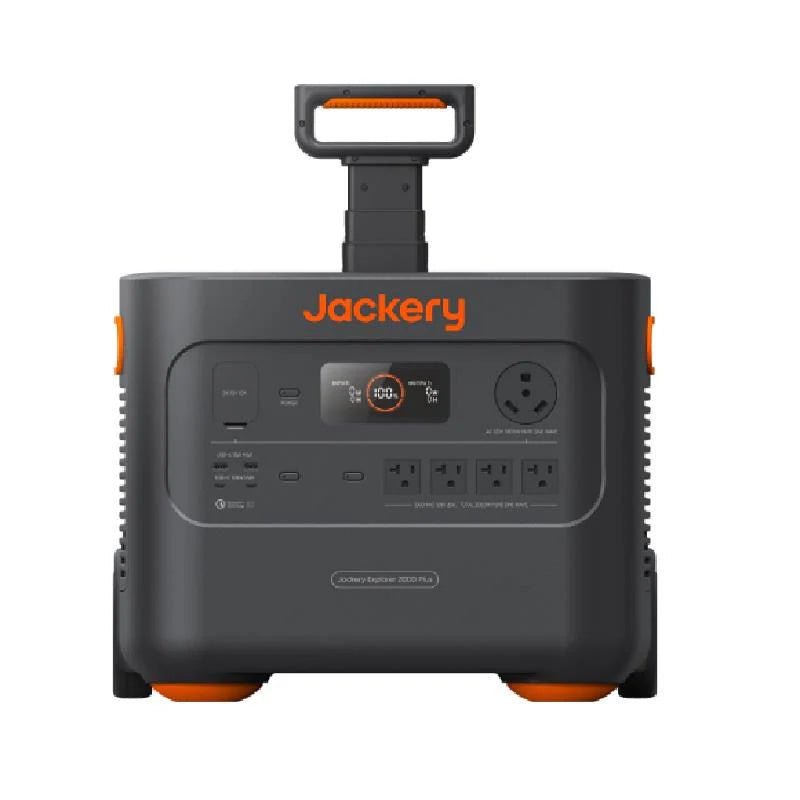
Best overall
Jackery Explorer 2000 Plus
2,042.8 Wh · 3,000 W · LiFePO4
$1,429 kit (out of stock)
Price checked Sep 30, 2026
The tanks are a tie. All three hold about two nights of fridge. What you’re really choosing is the family you’ll live with for years: whose extra battery you’ll buy, whose panel cable clicks into place, and whether anyone in the family speaks 240 volts when you need it. That decision outlasts a spec-sheet staring contest, and it is the one this page helps you make.

Chemistry won’t separate these three, however hard the ads try: Jackery says LiFePO4, BLUETTI says LiFePO4, Anker says LFP. One lithium-iron-phosphate family wearing two spellings. So we skip the cycle-life slogans and copy what a buyer can actually plan with: watt-hours, inverter watts, weight, voltage, room to grow, and the price on the maker’s US page, all dated September 30, 2026.
The three machines are the Jackery Explorer 2000 Plus, the BLUETTI AC200L, and the Anker SOLIX C2000 Gen 2, and only those three. No cousin models dragged in to fatten a matrix. The job-by-job picks live on the best-of page. This page is about the years after the box arrives: second batteries, panel cables, and the one 240-volt door.
The shops: Jackery, BLUETTI, Anker SOLIX. The arrangement is on the disclosure page.
The makers’ own photos, on our shelf. A note on the surge column: Jackery and BLUETTI never print one clean figure, so those cells carry a dash. Anker prints 4,000 watts of peak on the C2000 Gen 2, and we copy that exactly as far as it goes and not one watt further.
3 models in this category
2,042.8 Wh · 3,000 W · LiFePO4
$1,429 kit (out of stock)
Price checked Sep 30, 2026
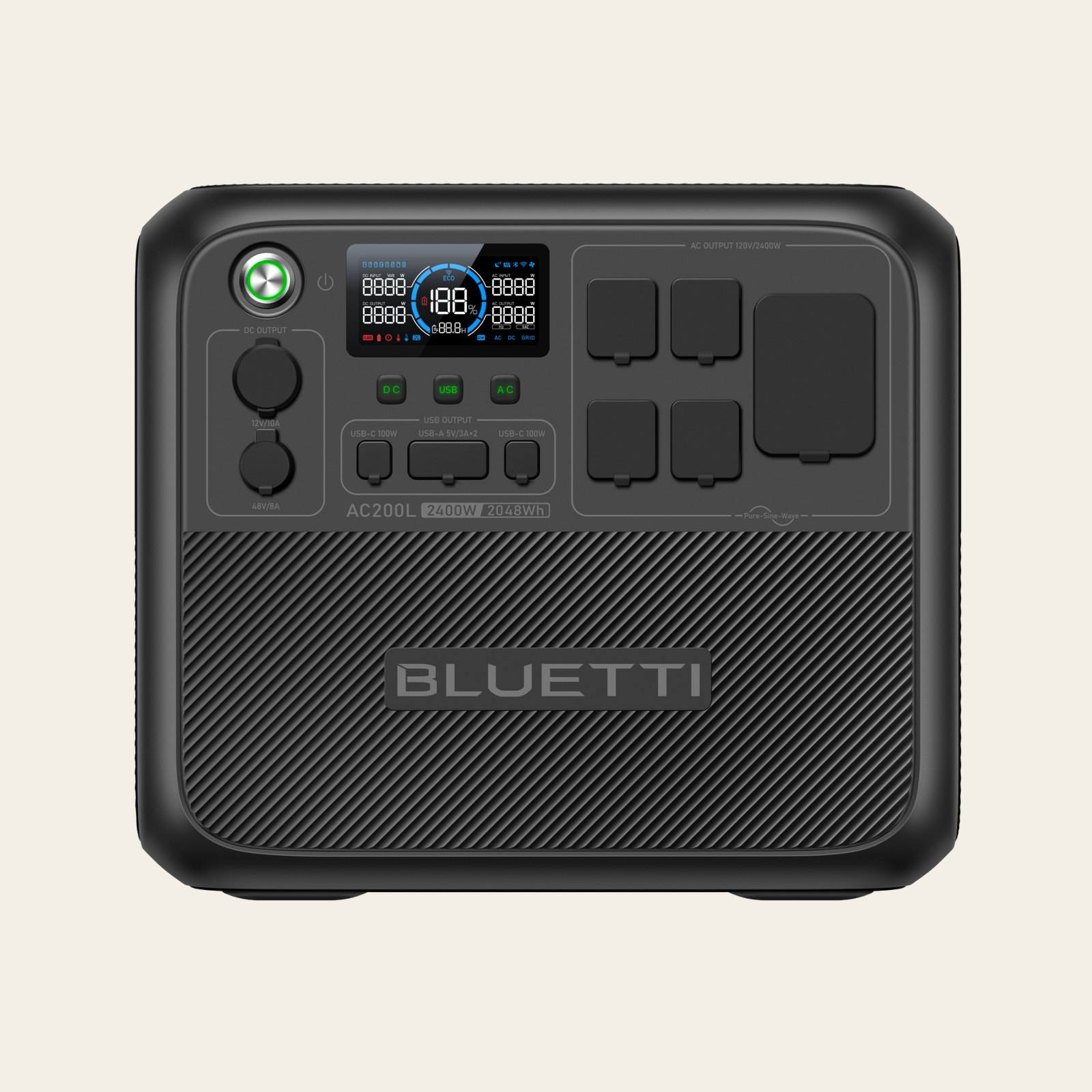
2,048 Wh · 2,400 W · LiFePO4
$899
Price checked Sep 30, 2026
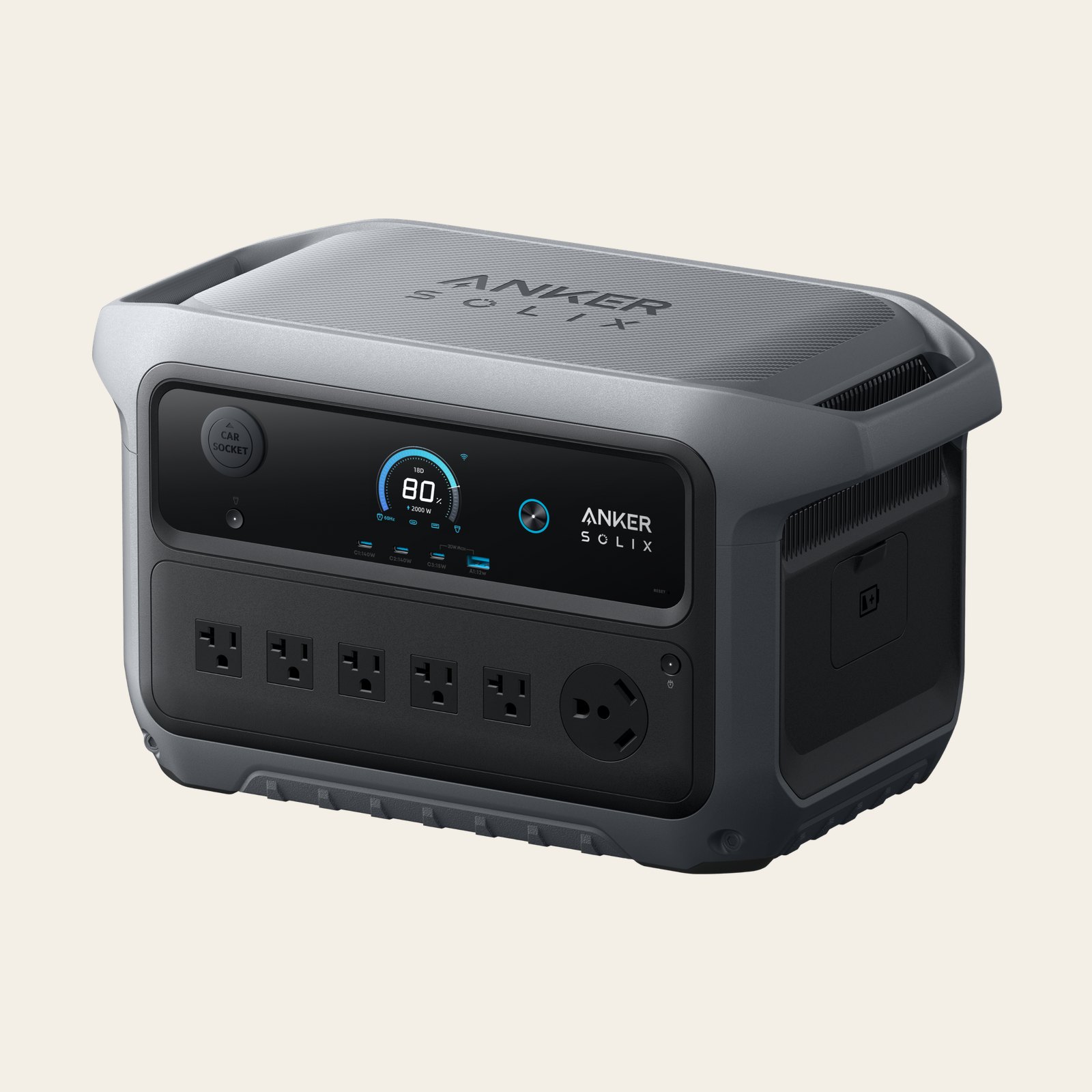
2,048 Wh · 2,400 W · LFP
$899.99
Price checked Sep 30, 2026
Product photographs are the manufacturers’ own studio shots, used as supplied. Specifications and prices come from their US product pages, checked September 30, 2026.
| Model | Rated capacity | Rated output | Weight | Price |
|---|---|---|---|---|
| Explorer 2000 Plus, opens in a new tab Jackery | 2,042.8 Wh | 3,000 W | 61.5 lb | $1,429 kit (out of stock) |
| AC200L, opens in a new tab BLUETTI | 2,048 Wh | 2,400 W | 62.4 lb | $899 |
| C2000 Gen 2, opens in a new tab Anker SOLIX | 2,048 Wh | 2,400 W | 41.7 lb | $899.99 |
Day one is a tie: 2,042.8, 2,048, and 2,048 watt-hours. The families part ways at the second battery.
Stock and firmware outrank brand loyalty. An extra battery that’s backordered through your storm season isn’t room to grow. Check the live cart the week you buy, and once more before the forecast turns.
Weight is the spec everyone skips in a browser and meets on a staircase. As listed: Anker 41.7 pounds, Jackery 61.5, BLUETTI 62.4. Call it twenty pounds between the light one and the pair.
None of the three is a backpack, but they live differently. A station that parks in the garage and feeds the kitchen through a rated cord should be chosen on inverter and expansion. The scale is trivia there. A station that has to reach a second-floor kitchen, a car trunk, or the in-laws’ place should be chosen on the scale first, and the Anker wins that conversation before it starts.
All three featured stations are 120-volt, and that single sentence is the entire well-pump conversation: extra batteries deepen the tank, but no module ever grows the second hot leg a 240-volt load needs. A well, an electric dryer, a split-phase air handler: those need different hardware.
Here’s where Anker differentiates the family: the SOLIX F3800 (3,840 Wh, 6,000 W steady, 9,000 W surge, 120/240 V, 132.3 lb, $2,199.98 that day) is the 240-volt cabinet waiting one category over, in home batteries. It is a fork sitting one category over, and averaging it into a “best 2 kWh station” score would flatter nobody. But if there’s any chance your house grows into a 240-volt need, buying into the family that has an answer is a real thought. (Whole-home HVAC for days is still the generator category’s job.)
Each family folds its own daylight, and staying in-family keeps the cable matched and the voltage arithmetic honest. The rules live in the panel buying guide. Here’s the short version, family by family:
And never land a rooftop string on a portable input: different product, different voltages, expensive lesson. The panel category: portable solar panels.
Jackery’s argument is 3,000 watts of steady output, 600 more than either rival, plus a named extra battery and the lightest panel carry in the catalog. The core as listed: 2,042.8 Wh, 61.5 lb, 120 V, LiFePO4, $1,429 for the kit with two SolarSaga 100W mini panels, checked September 30, 2026, out of stock on jackery.com that day. No standalone unit is listed. Refurbished kits exist; we do not quote them as the featured price. The hop stays Jackery, brand-root. Surge is left blank, by the usual rule.
Choose this family when stacked 120-volt loads are your evening’s shape (the fridge humming while the microwave takes its turn), and when the SolarSaga’s one-hand carry means the panel actually gets unfolded. Explorer 2000 Plus notes tell the rest.
See Jackery Explorer 2000 Plus kit on Jackery.com (check restock), opens in a new tab
Price checked Sep 30, 2026
BLUETTI’s argument is the attic: modules stacking to a printed 8,192 Wh, the biggest 120-volt ceiling here. The core: 2,048 Wh, 2,400 W, 62.4 lb, $899 that day on shop.bluettipower.com, checked September 30, 2026. No sale off a higher figure. The main bluettipower.com product page lists Discontinued / unavailable. Surge, left blank. Same rule, same reason.
Eight thousand watt-hours is a long stretch of fridge, router, and reading lamps, and zero minutes of a 240-volt well. Choose this family when the extra modules and an SP200L are budgeted plans rather than warm intentions. AC200L notes go deeper.
See BLUETTI AC200L on bluettipower.com, opens in a new tab
Price checked Sep 30, 2026
Anker’s argument comes in two parts that shouldn’t share a score. The C2000 Gen 2 is the light one: 41.7 pounds, with the trio’s only printed peak (4,000 W) and growth to 4 kWh, at $899.99, or when that 240-volt door down the hall is worth having in the family. A light station never grows a second hot leg. A family, though, can own both machines. C2000 Gen 2 notes have the details.
See Anker SOLIX C2000 Gen 2 on ankersolix.com, opens in a new tab
Price checked Sep 30, 2026
A budgeted second battery says AC200L. A staircase or a car trunk says C2000 Gen 2. Stacked kitchen loads say Explorer 2000 Plus. And any 240-volt load says none of the three, so go meet the F3800 instead.
How we know: Specification analysis of maker US product pages (dated). No hands-on lab tests.
Price check: jackery-explorer-2000-plus: $1,429 kit, out of stock (checked 2026-09-30); bluetti-ac200l: $899 (checked 2026-09-30); anker-solix-c2000-gen2: $899.99 (checked 2026-09-30) — from merchant page / products.json; may change.
Limits: We did not run a hands-on lab on these units. Surge blanks stay blank where the maker never prints one clean figure. EcoFlow stays comparison-only (no hop). Disclosure mode is dormant — we do not claim commissions.
Any of the three can be the right cart the month you buy. Extra-pack stock, sale prices, and firmware all wander. There’s no teardown warehouse behind this page. It is the makers’ dated ratings plus the documented ways buyers get burned (surge, voltage, backfeed), plus what owners keep saying about fridge starts, read closely. Method: how we work · corrections: contact · privacy: privacy.