
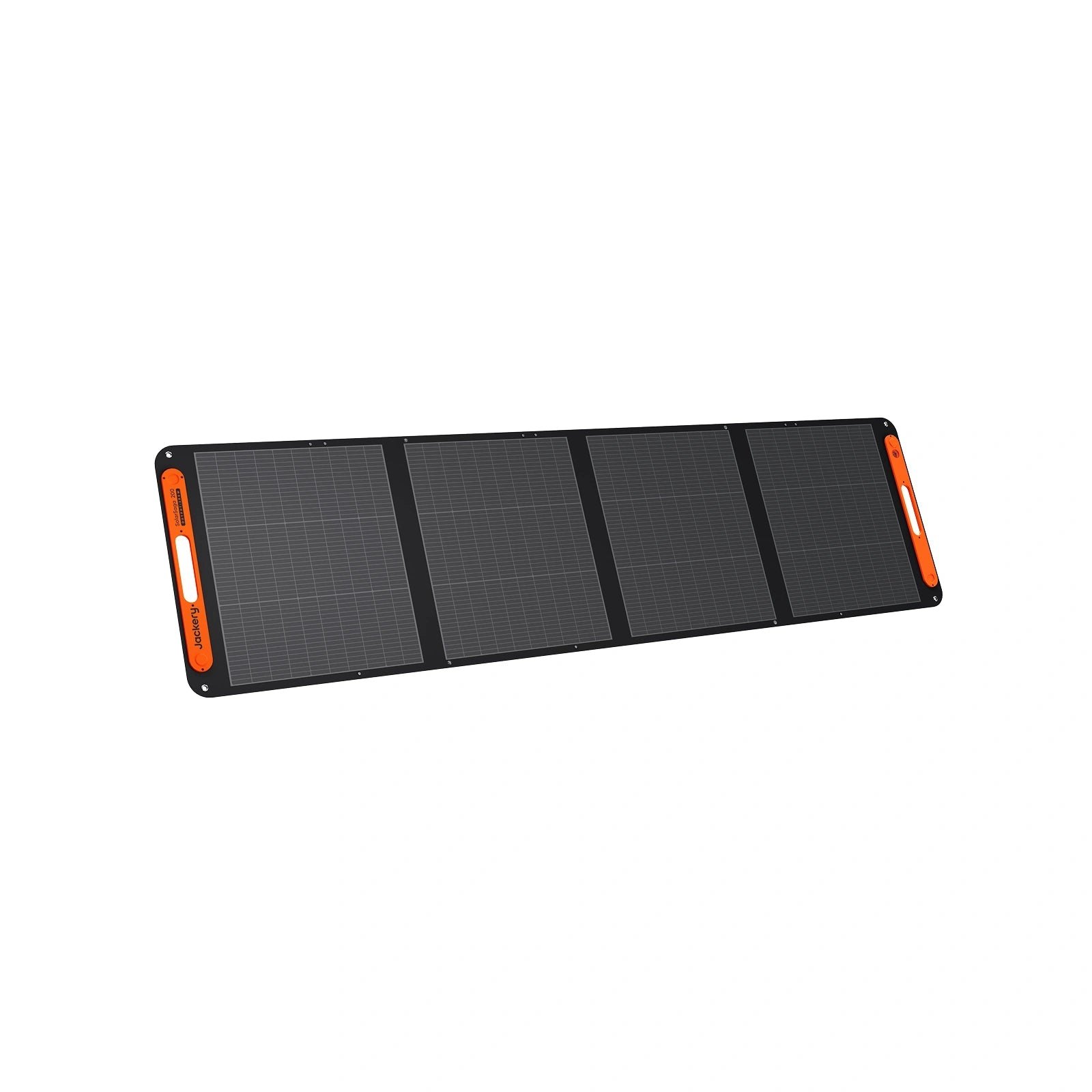
Best overall
Jackery SolarSaga 200W
200 W · 14.33 lb · IP68
$379 $429
Price checked Aug 26, 2026
Wattage stickers do not rank this list. A folder earns a card when your station will accept it at noon, the cable clicks without a scavenger hunt, and somebody in the house will actually make the walk. Three folders clear that bar, one per family.
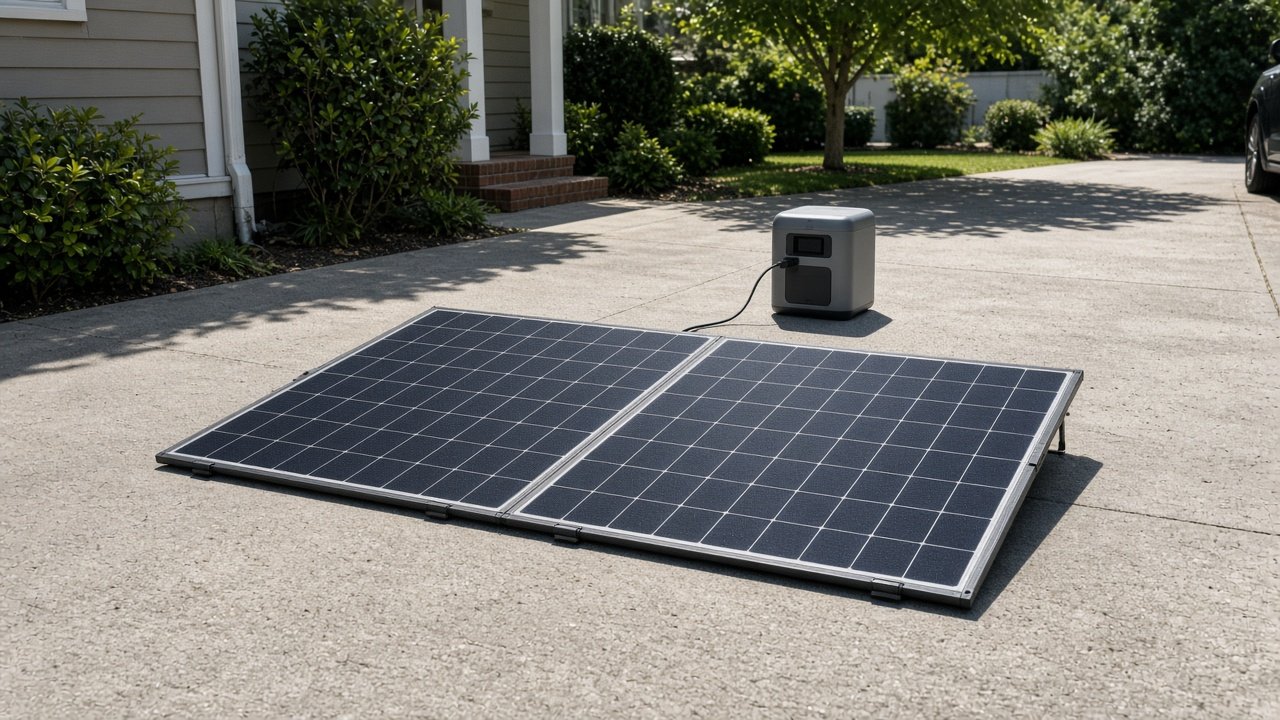

Three panels, assigned by the station they refill. Buyers in this aisle rarely lose money on watts. They lose it on open-circuit voltage, an orphaned connector, and a 35-pound folio that never leaves the garage. Roofs live elsewhere. The briefcase shape has a format guide and no named model, because no maker gave us a clean official photo of one.
Matching beats mixing. A Jackery SolarSaga 200W into a Jackery input, a BLUETTI SP200L into a BLUETTI, an Anker SOLIX PS400 into Anker SOLIX. Stay on Anker SOLIX, not Anker.com retail. Cross-brand adapters exist. None of them excuses skipping the station’s voltage ceiling. Shops and the arrangement: disclosure.
The makers’ own studio photos. Specs and street prices from the US product pages we snapshotted August 26, 2026. A blank Voc cell means the manufacturer never printed one figure we could copy. We would rather show you a dash than a reseller’s guess.
Best overall
Jackery SolarSaga 200W
$379 Price checked Aug 26, 2026
See Jackery SolarSaga 200W on Jackery.com, opens in a new tab
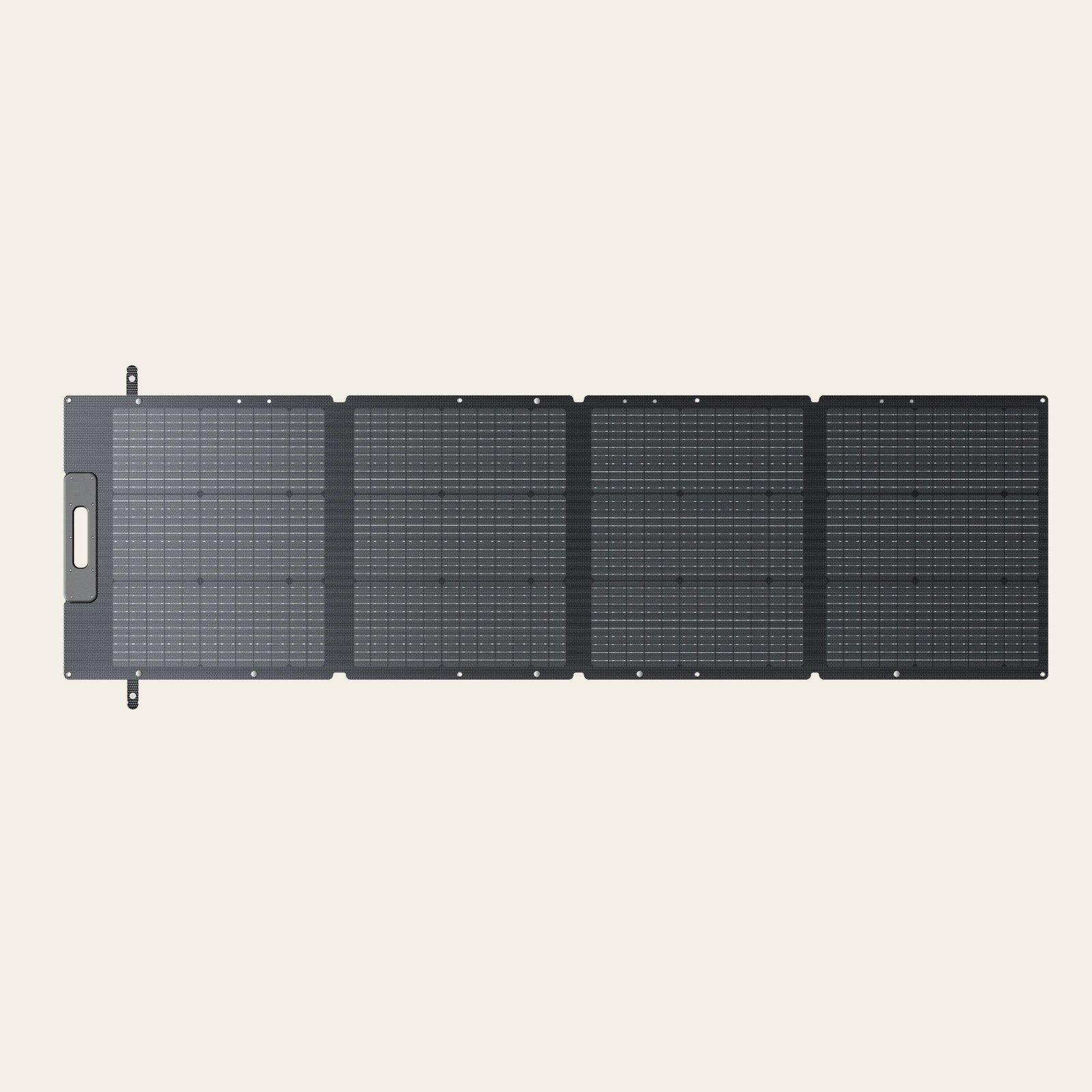 Best for BLUETTI owners
BLUETTI 200W Portable Solar Panel (SP200L)
$399 Price checked Aug 26, 2026
See BLUETTI 200W Portable Solar Panel (SP200L) on bluettipower.com, opens in a new tab
Best for BLUETTI owners
BLUETTI 200W Portable Solar Panel (SP200L)
$399 Price checked Aug 26, 2026
See BLUETTI 200W Portable Solar Panel (SP200L) on bluettipower.com, opens in a new tab
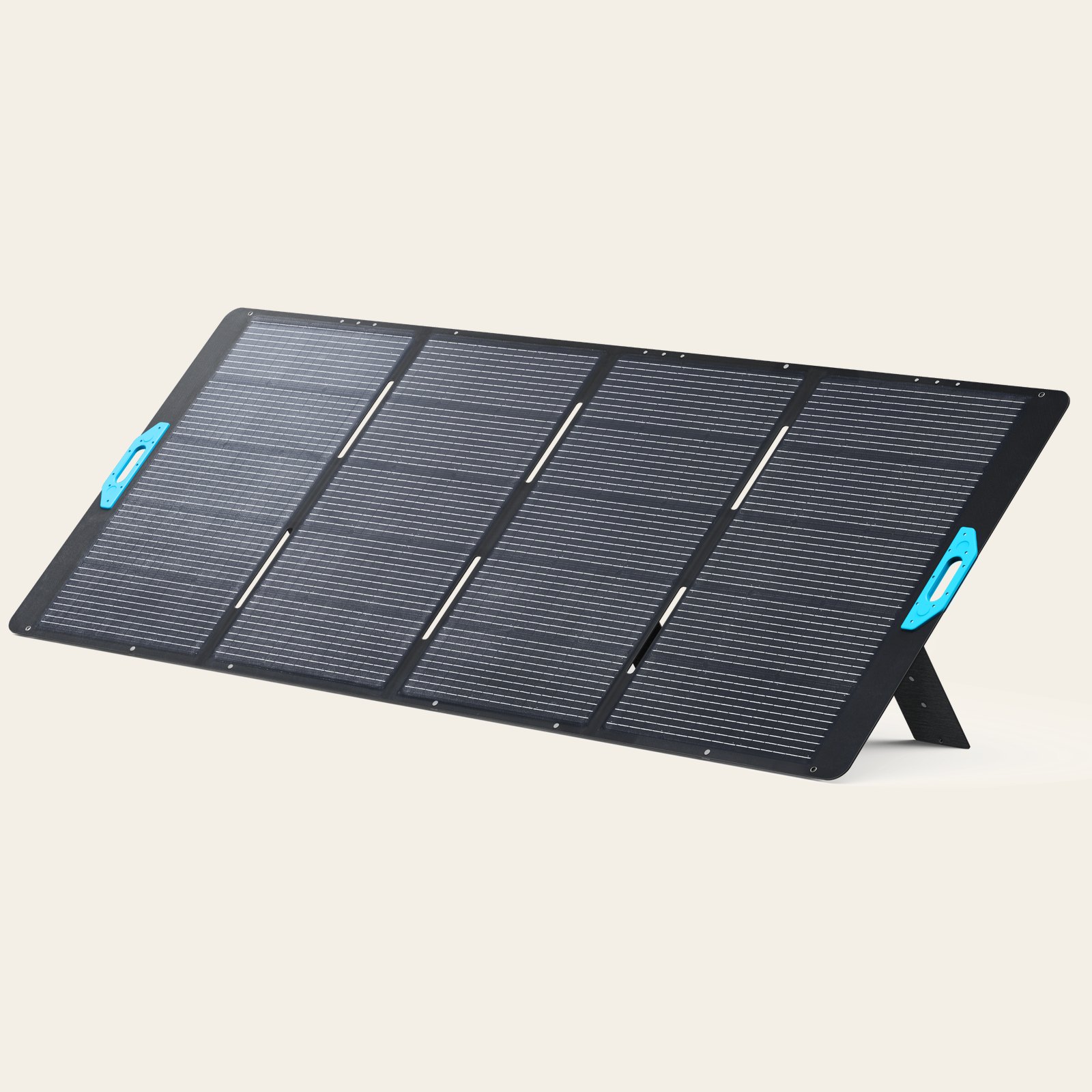 Most watts
Anker SOLIX PS400
$699.99 Price checked Aug 26, 2026
See Anker SOLIX PS400 on ankersolix.com, opens in a new tab
Most watts
Anker SOLIX PS400
$699.99 Price checked Aug 26, 2026
See Anker SOLIX PS400 on ankersolix.com, opens in a new tab
3 models in this category
200 W · 14.33 lb · IP68
$379 $429
Price checked Aug 26, 2026
200 W · 17.15 lb · 24.6 V
$399
Price checked Aug 26, 2026
400 W · 35.3 lb · IP67
$699.99
Price checked Aug 26, 2026
Product photographs are the manufacturers’ own studio shots, used as supplied. Specifications and prices come from their US product pages, checked August 26, 2026.
Rated watts, weight, sealing, price. Voc lives in the copy below, not as a made-up column. Sealing: Jackery prints IP68, Anker prints IP67, BLUETTI never states one cleanly, so that cell stays empty.
| Model | Rated output | Weight | Weather sealing | Price |
|---|---|---|---|---|
| SolarSaga 200W, opens in a new tab Jackery | 200 W | 14.33 lb | IP68 | $379 |
| 200W Portable Solar Panel, opens in a new tab BLUETTI | 200 W | 17.15 lb | $399 | |
| PS400, opens in a new tab Anker SOLIX | 400 W | 35.3 lb | IP67 | $699.99 |
Open-circuit voltage is the spec that ends charge controllers. Series wiring adds voltage. Parallel adds current. Cold adds a little more voltage on the prettiest morning of the year. The SP200L prints 24.6 V plainly, and you should still check it against the station before doubling up. SolarSaga 200W and PS400 carry dashes because their makers’ pages never agree. If you cannot find a number you trust, one matched panel is the whole plan. The lecture: panel buying guide.
Explorer owners start here, and usually finish here. As listed: 200 W, 14.33 lb, IP68, $379 that day ($429 listed). Unfold, click the cable into the Explorer 2000 Plus, aim twice before lunch, fold before errands. Voltage is a dash, so no series experiments on a forum’s say-so. The hop stays Jackery, brand-root. Full notes: SolarSaga 200W.
See Jackery SolarSaga 200W on Jackery.com, opens in a new tab
Price checked Aug 26, 2026
The matched folder for the AC200L, and the one panel here whose paperwork you can actually finish: 200 W, 17.15 lb, $399, Voc printed at 24.6 V. Weather-sealing is the dash on this card, because BLUETTI never states one cleanly. Still a one-person carry. Shop: BLUETTI. Full notes: SP200L.
See BLUETTI 200W Portable Solar Panel (SP200L) on bluettipower.com, opens in a new tab
Price checked Aug 26, 2026
When a 200-watt folder undershoots the daylight you actually use, and 35.3 pounds is a walk you mean to make, the PS400 doubles the glass: 400 W, IP67, $699.99, Voc a dash. Confirm the solar watt ceiling on the C2000 Gen 2 or the F3800 first. Glass above the input is expensive exercise. Stay on Anker SOLIX. Shop: Anker SOLIX. Full notes: PS400.
See Anker SOLIX PS400 on ankersolix.com, opens in a new tab
Price checked Aug 26, 2026
How we know: Specification analysis. No irradiance logging.
Price check: jackery-solarsaga-200w: $379 (list $429) (checked 2026-08-26); bluetti-sp200l: $399 (checked 2026-08-26); anker-solix-ps400: $699.99 (checked 2026-08-26) (2026-08-26) — from merchant page / products.json; may change.
Limits: We did not run a hands-on lab on these units. Surge blanks stay blank where the maker never prints one clean figure. EcoFlow stays comparison-only (no hop). Disclosure mode is dormant — we do not claim commissions.
Yield is weather wearing a spec sheet. A 200-watt folder in decent sun hands back somewhere between half and a full kilowatt-hour over a day. That is useful against a two-night tank. It is never the 200-times-eight of the advertisement. The PS400’s 400 watts will not conjure three kilowatt-hours from a gray driveway either. Shade on one corner drags the whole panel down. Kickstands skate. Folding fabric catches the gusts you would expect. None of this is a defect. It is sunshine, being sunshine.
Match the panel to the station you already chose. SolarSaga with the Explorer, SP200L with the AC200L, PS400 with the Anker machines once the window checks out. A four-hour evening stays a battery purchase. A sunny multi-day event is where any of these three earns its keep. A sunless ice storm was always watt-hours or an engine, refereed at battery vs standby.
Two panels is a wiring project with one entrance exam: say whether you are wiring series or parallel, and why. If that sentence will not come, one matched panel is the right answer. Sealing ratings (IP68 on the SolarSaga, IP67 on the PS400, a dash on the SP200L) cover water and dust. They do not cover hail. They do not cover thieves. Fold before the storm you can see coming.
No year of logged irradiance in a lab we own. These picks are the job, plus the family, plus the makers’ dated figures, read closely. Window-glass charging remains a demo. Specs dated August 26, 2026. Deeper homework: buying guide · method: how we work · corrections: contact.
If you buy after a link here, we may earn a small commission. Your price does not change. Disclosure.