
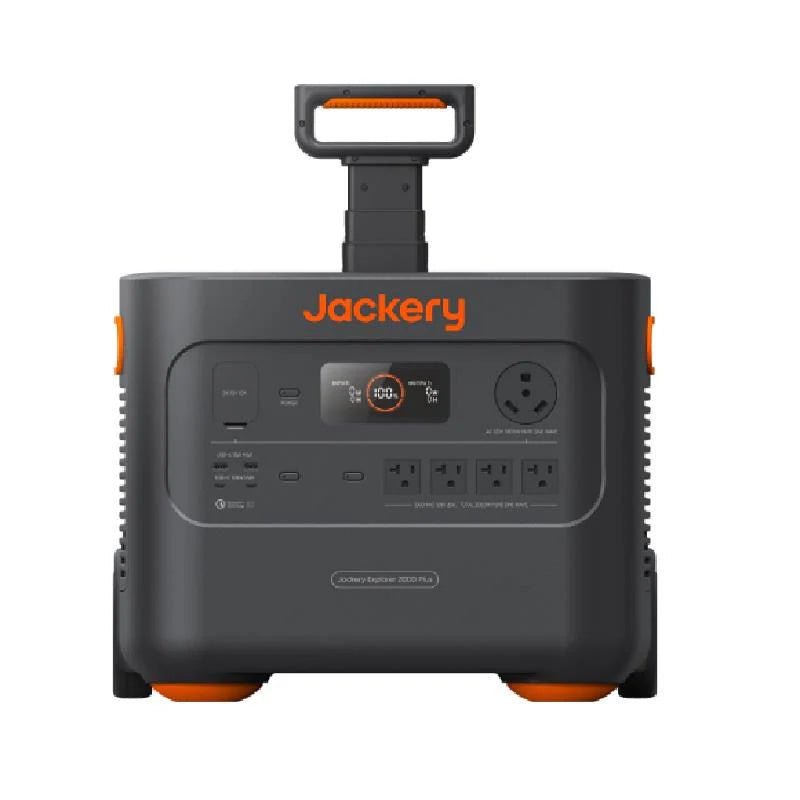
Best overall
Jackery Explorer 2000 Plus
2,042.8 Wh · 3,000 W · LiFePO4
$1,429 kit (out of stock)
Price checked Sep 30, 2026
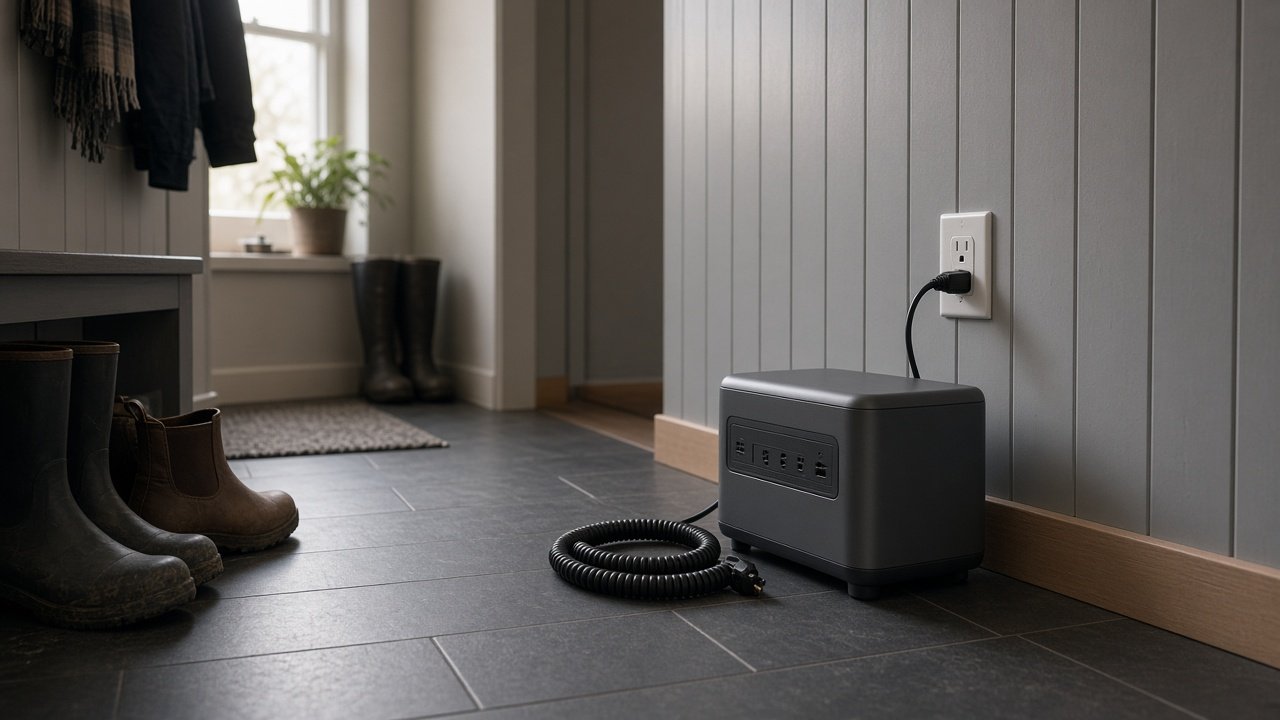
Call it a solar generator if you like. A big, patient battery with outlets. It sits in a hallway, holds about two nights of fridge, and doesn’t make a sound worth mentioning. This is the friendliest corner of home backup, and for most houses it’s the right first buy.

Method: how we pick · disclosure. Spec-based unless a photo of the unit in our hands is shown.
Here’s the little secret of this whole category: the fridge you’re worried about only sips about 150 watts once it’s cold (porch-light money) — full closed-door math on fridge runtime, or plug your own list into the load calculator — and the box that makes your internet runs on less than a lamp. That’s the load this category carries. When the utility drops, you roll the station into the kitchen, plug in the refrigerator and the router, and go back to your evening. No fuel, no fumes, no cord out the window. You don’t power the whole house, and you never backfeed a dryer outlet, but the food keeps, the group chat stays alive, and the night feels a lot less like an emergency.
The short answer, if you only have a minute. Every price below carries the day we checked it.
Best overall
Jackery Explorer 2000 Plus
$1,429 kit (out of stock) Price checked Sep 30, 2026
See Jackery Explorer 2000 Plus kit on Jackery.com (check restock), opens in a new tab
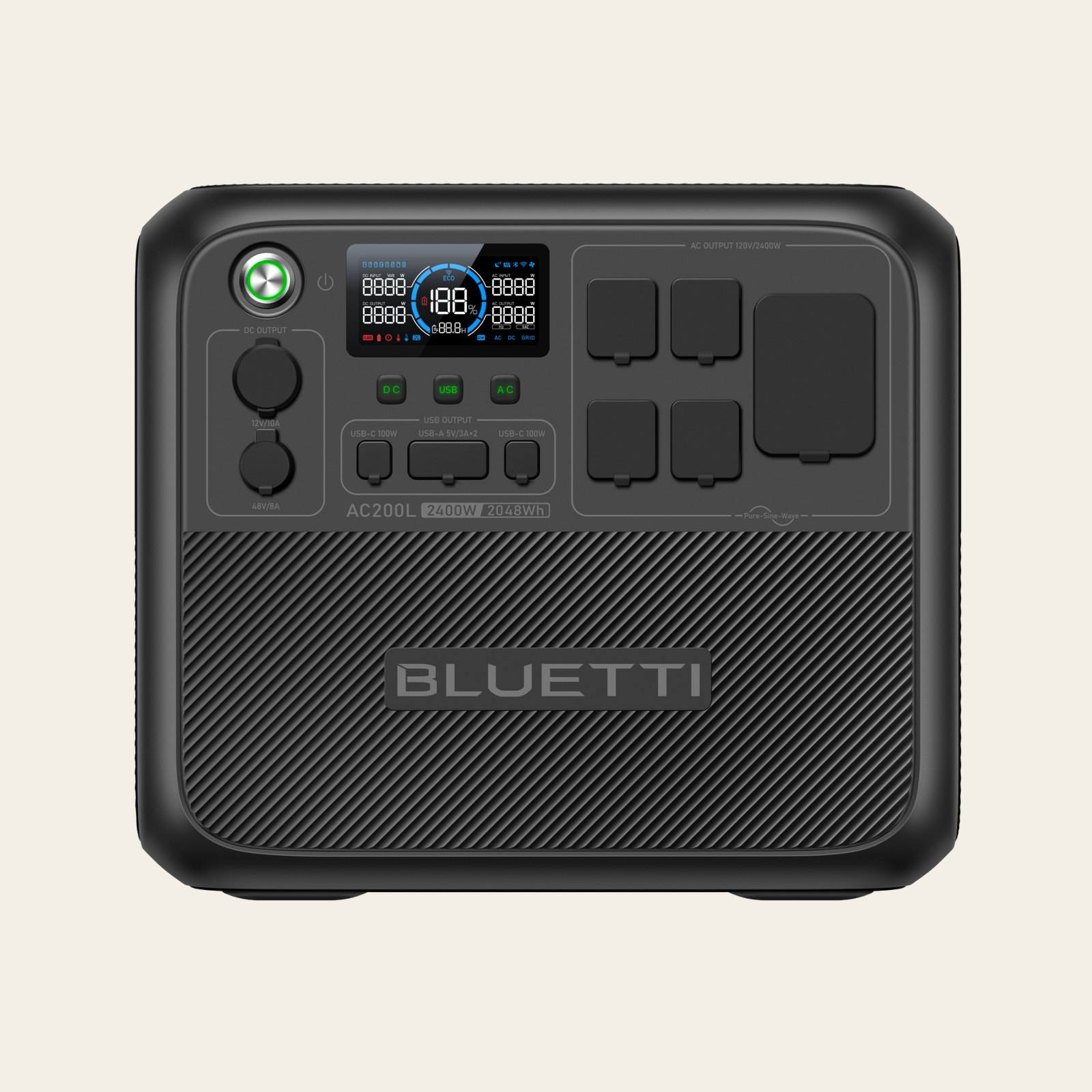 Most expandable
BLUETTI AC200L
$899 Price checked Sep 30, 2026
See BLUETTI AC200L on bluettipower.com, opens in a new tab
Most expandable
BLUETTI AC200L
$899 Price checked Sep 30, 2026
See BLUETTI AC200L on bluettipower.com, opens in a new tab
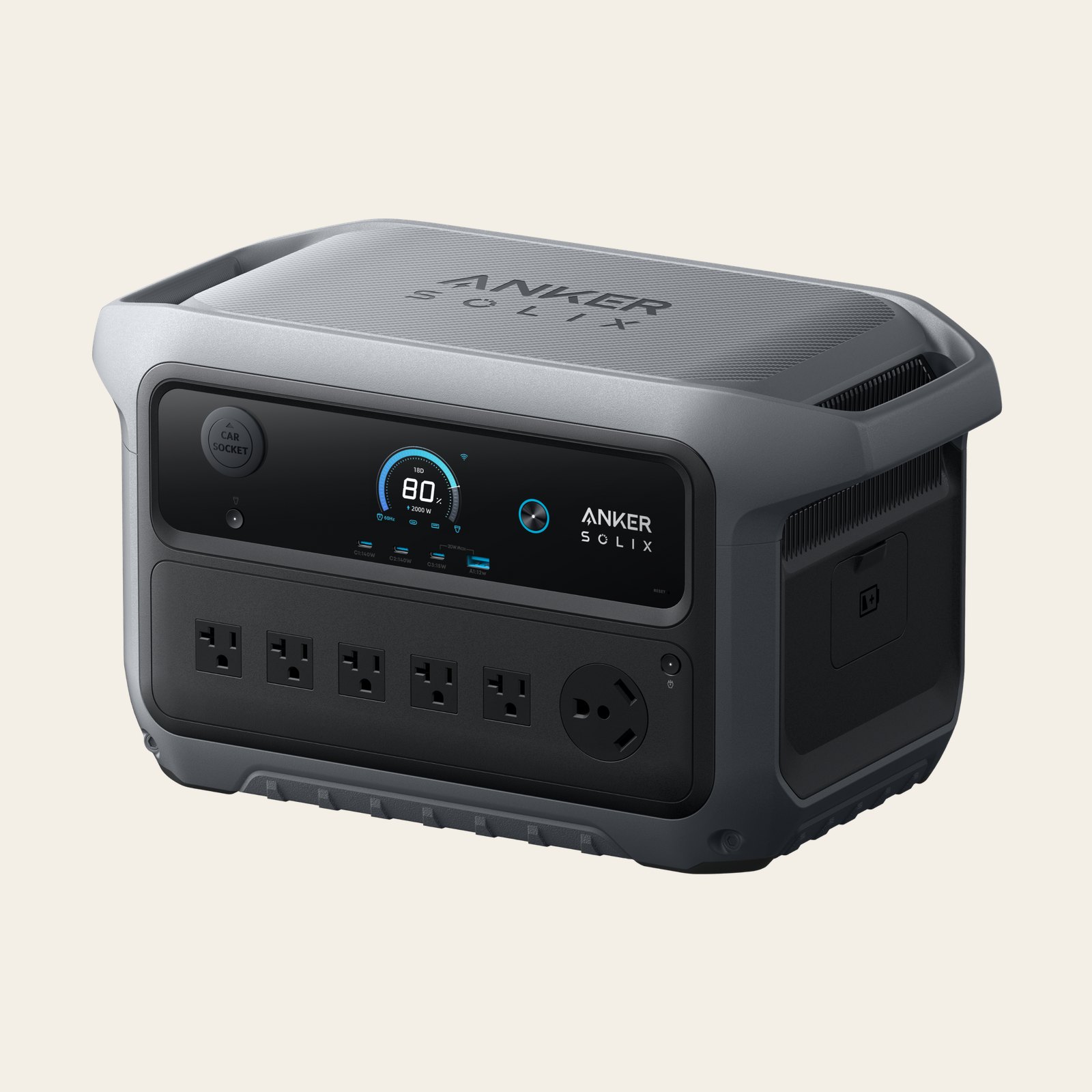 Lightest to carry
Anker SOLIX C2000 Gen 2
$899.99 Price checked Sep 30, 2026
See Anker SOLIX C2000 Gen 2 on ankersolix.com, opens in a new tab
Lightest to carry
Anker SOLIX C2000 Gen 2
$899.99 Price checked Sep 30, 2026
See Anker SOLIX C2000 Gen 2 on ankersolix.com, opens in a new tab
We feature one class here, because it’s the one that fits the job: around 2 kWh, 120 volts, lithium iron phosphate. Three machines wear it well. The Jackery Explorer 2000 Plus (2,042.8 Wh, 3,000 W, 61.5 lb, $1,429 kit with two SolarSaga 100W mini panels; out of stock on jackery.com, no standalone unit listed) brings the strongest inverter. The BLUETTI AC200L (2,048 Wh, 2,400 W, 62.4 lb, $899 on shop.bluettipower.com; main bluettipower.com product page lists Discontinued / unavailable) can grow all the way to 8,192 Wh with extra batteries. And the Anker SOLIX C2000 Gen 2 (2,048 Wh, 2,400 W with a 4,000 W peak, $899.99, 41.7 pounds, the one you’ll actually carry upstairs. Street prices checked September 30, 2026. Where a spec sheet went quiet (Jackery and BLUETTI never print one clean surge number), we left the cell quiet too, rather than guess on your behalf.
One honest fork before you settle in: if your must-keep list includes a 240-volt load (a well pump, most dryers, some furnace air handlers), this category can’t help, and no amount of extra batteries changes that. The 240-volt answer is the Anker SOLIX F3800 over in home batteries, or a standby generator if the house has to run for days. And when the grid stays down past the first tank, daylight refills come from portable solar panels. Write down what has to stay on first. The machine follows from the list, every time.
New to all of this? Read it in order, the way a patient friend would take you through it. The buying guide is the gentle math: running watts, starting watts, watt-hours, and the one solar voltage worth respecting. Prefer a form over a paragraph? Use the load calculator. Wet basement on the must-keep list? See sump pump runtime. The best-of page hands each of the three machines the job it’s best at. The head-to-head is about the years after the purchase: extra packs, panel cables, and which family you’re marrying into. And stations for home backup is the night itself: what runs, what doesn’t, and how to set it all up before the weather does it for you.
3 models in this category
2,042.8 Wh · 3,000 W · LiFePO4
$1,429 kit (out of stock)
Price checked Sep 30, 2026
2,048 Wh · 2,400 W · LiFePO4
$899
Price checked Sep 30, 2026
2,048 Wh · 2,400 W · LFP
$899.99
Price checked Sep 30, 2026
Product photographs are the manufacturers’ own studio shots, used as supplied. Specifications and prices come from their US product pages, checked September 30, 2026.
| Model | Rated capacity | Rated output | Weight | Price |
|---|---|---|---|---|
| Explorer 2000 Plus, opens in a new tab Jackery | 2,042.8 Wh | 3,000 W | 61.5 lb | $1,429 kit (out of stock) |
| AC200L, opens in a new tab BLUETTI | 2,048 Wh | 2,400 W | 62.4 lb | $899 |
| C2000 Gen 2, opens in a new tab Anker SOLIX | 2,048 Wh | 2,400 W | 41.7 lb | $899.99 |
EcoFlow Delta 2 Max. Genuinely good hardware, fast to recharge, and a fair rival to all three on paper.
Goal Zero Yeti 1500X. A well-built machine with a long, loyal following. It loses this round on watt-hours per dollar. At the money these three ask, you’re getting about a third less capacity, and in an outage capacity is the whole argument.
Smaller 1,000 Wh stations. Lovely for camping, and plenty for keeping a phone and a laptop alive. Ask one to hold a refrigerator and it runs dry somewhere in the middle of the second night, which is precisely when you stop feeling clever about the $300 you saved.
Short framing only: this hub routes. Every child below has a one-line honest summary.
The buyer pages first, then the full reviews. Every link below is a real page with the prices dated, not a stub.
 The three stations we’d buy
Not a trophy list. Each machine gets the job it’s genuinely best at.
The three stations we’d buy
Not a trophy list. Each machine gets the job it’s genuinely best at.
 Jackery vs BLUETTI vs Anker SOLIX
Extra batteries, panel cables, and the 240-volt fork: the stuff that matters after the box arrives.
Jackery vs BLUETTI vs Anker SOLIX
Extra batteries, panel cables, and the 240-volt fork: the stuff that matters after the box arrives.
 How much battery your house actually needs
Running watts, starting watts, and watt-hours, with a pencil, not a sales pitch.
How much battery your house actually needs
Running watts, starting watts, and watt-hours, with a pencil, not a sales pitch.
 Using a power station for home backup
What runs, what fails, and how the night actually goes: fridge first, heater never.
Using a power station for home backup
What runs, what fails, and how the night actually goes: fridge first, heater never.
 Jackery Explorer 2000 Plus review
The strongest inverter of the three, and a named path to a second battery.
Jackery Explorer 2000 Plus review
The strongest inverter of the three, and a named path to a second battery.
 BLUETTI AC200L review
The one that grows: up to 8,192 Wh of quiet 120-volt runtime, added when you’re ready.
BLUETTI AC200L review
The one that grows: up to 8,192 Wh of quiet 120-volt runtime, added when you’re ready.
 Anker SOLIX C2000 Gen 2 review
Twenty pounds lighter than its rivals: the station that actually gets carried.
Anker SOLIX C2000 Gen 2 review
Twenty pounds lighter than its rivals: the station that actually gets carried.
A quiet word on who we link to: the featured shops are Jackery, BLUETTI, and Anker SOLIX. The price you pay never changes if a commission is paid. The whole arrangement is on the disclosure page.
This hub is a routing page, not a lab report. Product claims on child pages are spec-based unless those pages say otherwise. Hub lead photo is a real mudroom shot. Thumbnail SVGs in row cards are diagrams, not product fakes. disclosure · how we review.
Picks rest on the makers’ own printed ratings, the failure modes buyers actually report, and a refusal to guess where a page was unclear. Check the live specs before you spend four figures. Method: how we review. Spotted something off? Write us. Corrections are welcome here. Privacy: privacy.