
A transfer switch is a house product. A solar generator is a cord product.
People type “transfer switch” next to a solar generator because they want the wall outlets to stay live. That is a real wish. It is also a different purchase from the battery on the kitchen floor. This page sorts three legal paths and then stops. It will not sell you a weekend at the breaker panel.
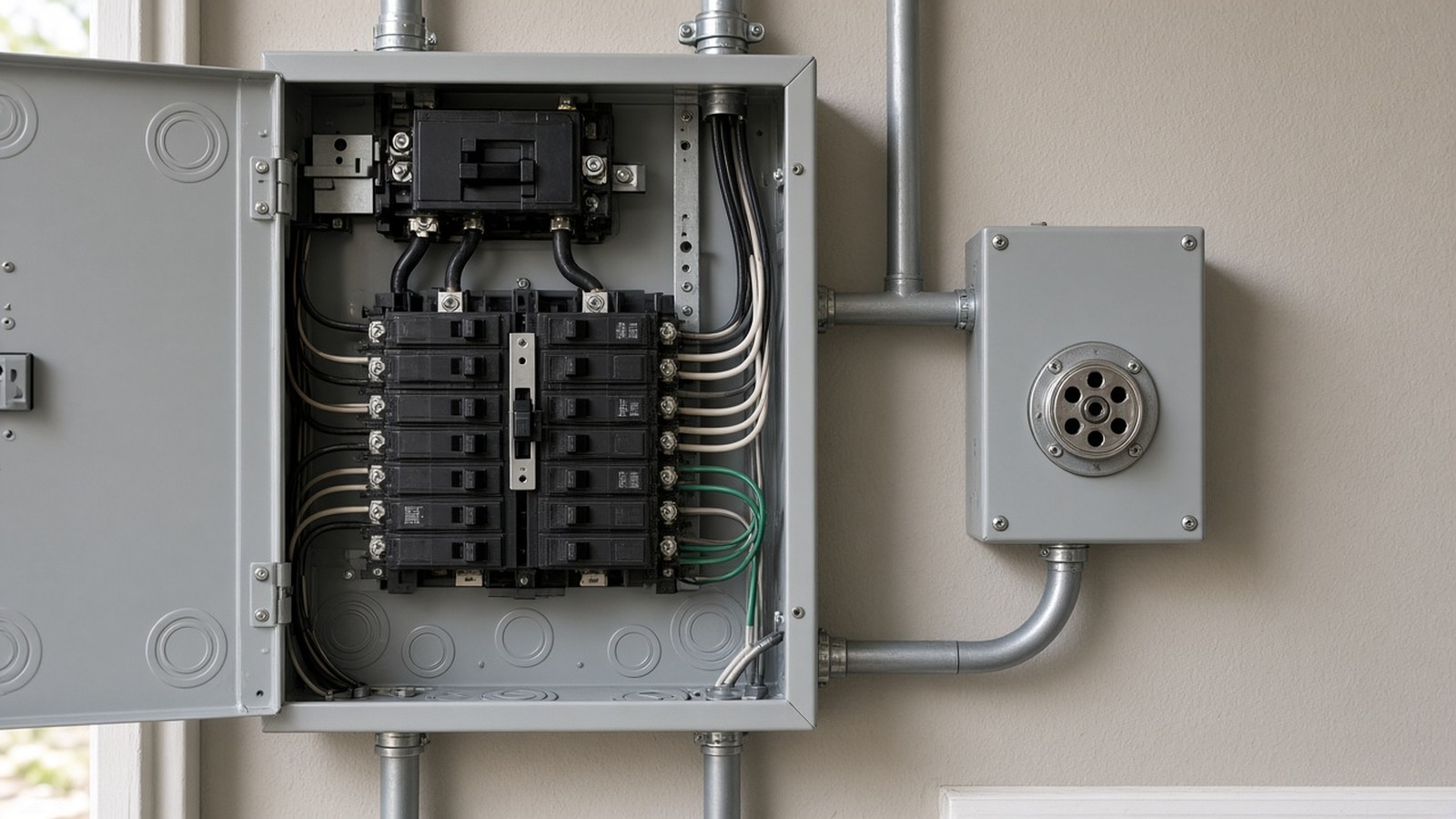

The short version
- Cords you can see are the default for a ~2 kWh 120 volt solar generator.
- An inlet box with an interlock is licensed work that keeps chosen wall circuits live without backfeeding.
- An automatic transfer switch belongs to a standby generator, not a Jackery.
- No DIY steps.
- No invented switch prices.
- Points at the whole house hub and existing SKUs.
Read this after the solar generators hub. The night map (fridge, internet, what fails) is stations for home backup. The pad and permit decision is the whole house generators hub. Nothing here is electrical, permitting, or fire code advice. Hire the person who will pull the permit.
The one rule with no warm version
Never backfeed a dryer outlet. No double ended cord. No “just for tonight.” A backfeed can energize the downed line a lineworker is about to touch, and it can burn the service. It is illegal essentially everywhere. The three paths below are the boring ones that keep that from happening.
Path 1: cords you can see
Station on the kitchen floor or in the hallway. Fridge, network, lamps on rated extension cords you can see the whole length of. No electrician. No inlet. No paperwork. This is the default for the class we feature, and a corded fridge is a completely successful outage. There is no trophy for complexity.
The machines this path is for: the BLUETTI AC200L (2,048 Wh, 2,400 W, 62.4 lb, $899 and orderable at bluettipower.com/products/ac200l, with 2 to 5 business day delivery), the Anker SOLIX C2000 Gen 2 (2,048 Wh, 2,400 W, 4,000 W peak printed, 41.7 lb, $999.99 with a code that expires January 1, 2027 (base price $1,199.99), checked October 15, 2026). BLUETTI figure checked October 12, 2026. Jackery: See Jackery Explorer 2000 Plus kit on Jackery.com. Full notes stay on those URLs. This page will not clone them.
Keep the list short. Close the refrigerator door. Skip the space heater. The fridge math is fridge runtime. Indoor safe is the quiet luxury of a battery: no exhaust, no engine. A gasoline generator does not borrow this paragraph. Combustion stays outside, at code distances, forever.
Path 2: inlet box and interlock
An electrician mounts a wall inlet, then a sliding plate (an interlock) in the panel so the utility main and the inlet cannot both feed the bus. The wall outlets you chose stay live. You still walk outside, or to the inlet, and plug the cord in. It is a manual transfer, not an automatic one.
This is licensed work in almost every US jurisdiction. This page will not name breaker sizes, torque specs, or which knock out to use. Owners keep saying they wanted the walls live so nobody tripped on a hallway cord. Spec sheets do not install that for you. Budget the visit before you budget a second battery. A legal interconnect on a 120 volt core can cost as much as the core. That does not make the core a bad machine. It makes the install the product.
Still 120 volts on the three featured stations. Extra batteries add watt hours. They never add the missing hot leg. A well, a dryer, a split phase air handler still wants the Anker SOLIX F3800 (3,840 Wh, 6,000 W, 9,000 W surge, 120/240 V, 132.3 lb, $2,199.99 with a code that expires January 1, 2027 (base price $2,299.99), checked October 15, 2026) or a pad generator. The F3800’s whole argument is that split phase house hook, and hooking it up is still an electrician. Stay on Anker SOLIX, not Anker.com retail. See Anker SOLIX F3800 on ankersolix.com.
We do not have a dated manufacturer street price for an inlet kit or an interlock plate that we trust enough to print, so those cells stay blank. The electrician’s quote the week you buy is the number. Do not order a kit from a video and call it a plan.
Path 3: automatic transfer switch
An automatic transfer switch senses the outage, starts the standby generator, and flips the house. Nobody wades out at 2 a.m. with a cord. That is the product you are imagining when you type “transfer switch” next to whole house backup. It is not an accessory you add to a 2 kWh solar generator. The inverter, the fuel, the pad, and the switch are one project.
We do not sell named standby machines, and we will not invent a Generac link or a switch SKU. The thinking lives in the whole house generators hub: class, all in cost (the switch is a line on that bill, not a cart on this site), standby vs portable, and the buying guide. Fuel that survives the same storm, a pad that passes inspection, someone who will exercise the engine. Those are the ATS conversation. A Jackery is not invited.
If the honest list is fridge and router, put the tape measure down. Path 1 is cheaper and quieter and already legal. If the honest list is furnace, well, and days, skip this solar generator URL and go to the pad.
$899 at BLUETTI, opens in a new tab
Price checked Oct 15, 2026
Stay on cords if
- The must list is 120 volt and you can reach it with a rated cord.
- Outages run hours to a day, and a corded fridge counts as success.
- You would rather not open the panel.
This page is the wrong aisle if
- You wanted a how to for installing an interlock. That is an electrician, not an article.
- The house has to run itself: whole house generators.
- A 240 volt load votes and you still want a battery: F3800.
What we’re not claiming
This is not a wiring diagram, a permit checklist, or a price for a switch. Nobody here pulled a panel after a storm and timed the interlock. The three paths are the documented legal shapes plus what owners keep saying about hallway cords. Featured store links on the battery side: See BLUETTI AC200L on bluettipower.com, See Anker SOLIX C2000 Gen 2 on ankersolix.com, See Jackery Explorer 2000 Plus kit on Jackery.com. No generator link. Method: how we work · corrections: contact · privacy: privacy.
We are not earning commissions from these brands today; store links go straight to the maker. We do not earn on a transfer switch or a standby generator either. Disclosure.