
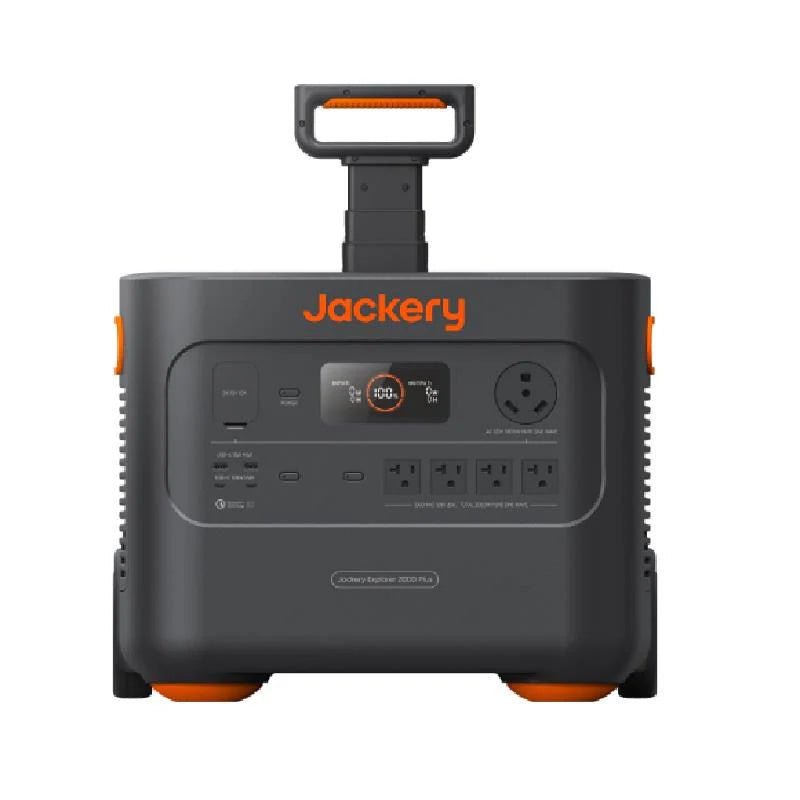
Best overall
Jackery Explorer 2000 Plus
2,042.8 Wh · 3,000 W · LiFePO4
$1,429 kit (out of stock)
Price checked Sep 30, 2026
A power station is a simple machine hiding behind a dense spec table. Two numbers decide almost every return in this class: whether the inverter can start the fridge, and whether the tank lasts the night. Here they are in the order that actually matters, run against the three 2 kWh stations this site names. No winner crowned. Bring a pencil.


Method: how we pick · disclosure.
Affiliate disclosure: Some links below are affiliate hops. If you buy after clicking, The Home Backup may earn a commission at no extra cost to you.
How much do you need? Use the load calculator — do not guess from a marketing Wh sticker. Fridge-only nights: fridge runtime. Basement pump: sump-pump runtime. Sleep gear: CPAP runtime. Then pick a machine on best portable power stations.
Most returns in this category start with a cart that came before the circuit list. This site runs the sequence the other way on every money page: job first, inverter second, kilowatt-hours third, cables and panels fourth, brand last. Method: how we work.
Running watts are the quiet, continuous draw. A modern refrigerator settles into a 150 to 250 W band once the compressor is spinning, and it is the same compressor that cycles at three in the morning. The lamps and a laptop charger are rounding error. The little box that makes your internet, the ONT plus the Wi-Fi, is usually well under 50 W for the pair. Measure yours if you can.
Add only what will actually run at the same time. The fridge, the internet, and a few lamps are one kind of evening — run the closed-door arithmetic on fridge runtime, or add your own list in the load calculator. The fridge, the microwave, and a space heater are another kind entirely, and the heater is the villain of this whole story. Heat empties 2 kWh before dinner. If heat is non-negotiable at your house, this class was never your answer: go read whole-house generators or home batteries instead. Clamp meter if you have one. Nameplates beat a guess.
Starting watts are the first second: the gulp a compressor takes before it settles into its hum. Pumps and some power supplies ask for several times their running draw, just for a beat, and if the inverter can’t hold that beat, the fridge clicks, gives up, and sits warm. That is a failed backup, not a runtime problem.
This is why the continuous rating matters, and why a printed peak matters when a manufacturer offers one. Among the three named stations:
Spec sheet says those figures, checked August 26, 2026. 3,000 W of continuous headroom is roomier than 2,400 W when loads stack, and 4,000 W of peak is a documented spike, not a well-pump rating. None of these inverters speaks 240 V. A well that does belongs with the Anker SOLIX F3800 (6,000 W, 9,000 W surge, 120/240 V) or a pad plant. Owners keep saying a typical kitchen fridge starts on all three. Your own compressor, on a calm afternoon, is still the check that counts.
Watt-hours are the tank, and your evening is the drain on it. Runtime is tank divided by the average draw, after you admit that inverters skim a little off the top and that nobody should plan on 100% of the label. The labels here: Jackery 2,042.8 Wh, BLUETTI 2,048 Wh, Anker 2,048 Wh. Call each a 2 kWh tank and you’re being fair. Call 80 to 90% of that usable on lithium iron phosphate and you’re being honest. We still quote nameplate, because nameplate is what the cart shows.
Examples, not promises. The internet alone, sipping 20 to 40 W, runs a long, long time. The fridge plus the internet, averaging 80 to 150 W, is a half-day to a day and change. Duty cycle is the unknown, and the door is the duty cycle. Microwave bursts are fine as bursts. A 1,500 W heater empties the tank in minutes, so do not buy this class for heat.
Expandability changes the tank, not the math. BLUETTI lists up to 8,192 Wh on the AC200L. Anker lists up to 4 kWh on the C2000 Gen 2. Jackery names the Battery Pack 2000 Plus. Extra packs buy more nights of fridge, lamps, and the baby monitor down the hall, all of it 120 V — how the add-on packs actually attach is on extra batteries. They buy you nothing at 240 V. Details: Jackery vs BLUETTI vs Anker SOLIX.
Jackery says LiFePO4. BLUETTI says LiFePO4. Anker says LFP. Same family: lithium iron phosphate, content to sit charged in a closet and then work a storm. That word is what this site prefers for a machine that waits most of its life, and that is where the claim stops. No cycle-count slides, no numbers the manufacturers didn’t print. Keep the case dry and indoor-adjacent, and follow the live page for temperature limits.
The wall does most of the refilling in real life: a flicker, power back, top it up, wait. Wall-charge wattages and “0 to 100% in X minutes” claims weren’t in the dated spec set this site allows itself to quote, so read the live product page for charge rates the week you buy.
The sun is less reliable. A panel’s nameplate is a lab number, not a 4 p.m.-under-clouds number. A 200 W folder in decent sun might hand back on the order of 0.6 to 1.2 kWh over a day, not 200 × 8. An overnight fridge is a battery problem. A grid that stays down through Thursday is a battery-plus-panel problem. Voc matching, series wiring, and carry weight live in the portable panel buying guide, not here. Stay in-family when you do buy glass: SolarSaga into Jackery, SP200L into BLUETTI, PS400 into Anker.
No invented port maps here, just three questions to put to the live page, and then to your own hallway.
Use a cord rated for the load, and run it where nobody trips over it at midnight. Never backfeed a dryer outlet. Inlet and interlock work is licensed work, so pay for it. The long interconnect essay lives in the home battery buying guide; this class is usually a corded fridge.
The “who should buy which” question lives on the best-of page. Here is just the arithmetic, with your list in hand.
3 models in this category
2,042.8 Wh · 3,000 W · LiFePO4
$1,429 kit (out of stock)
Price checked Sep 30, 2026
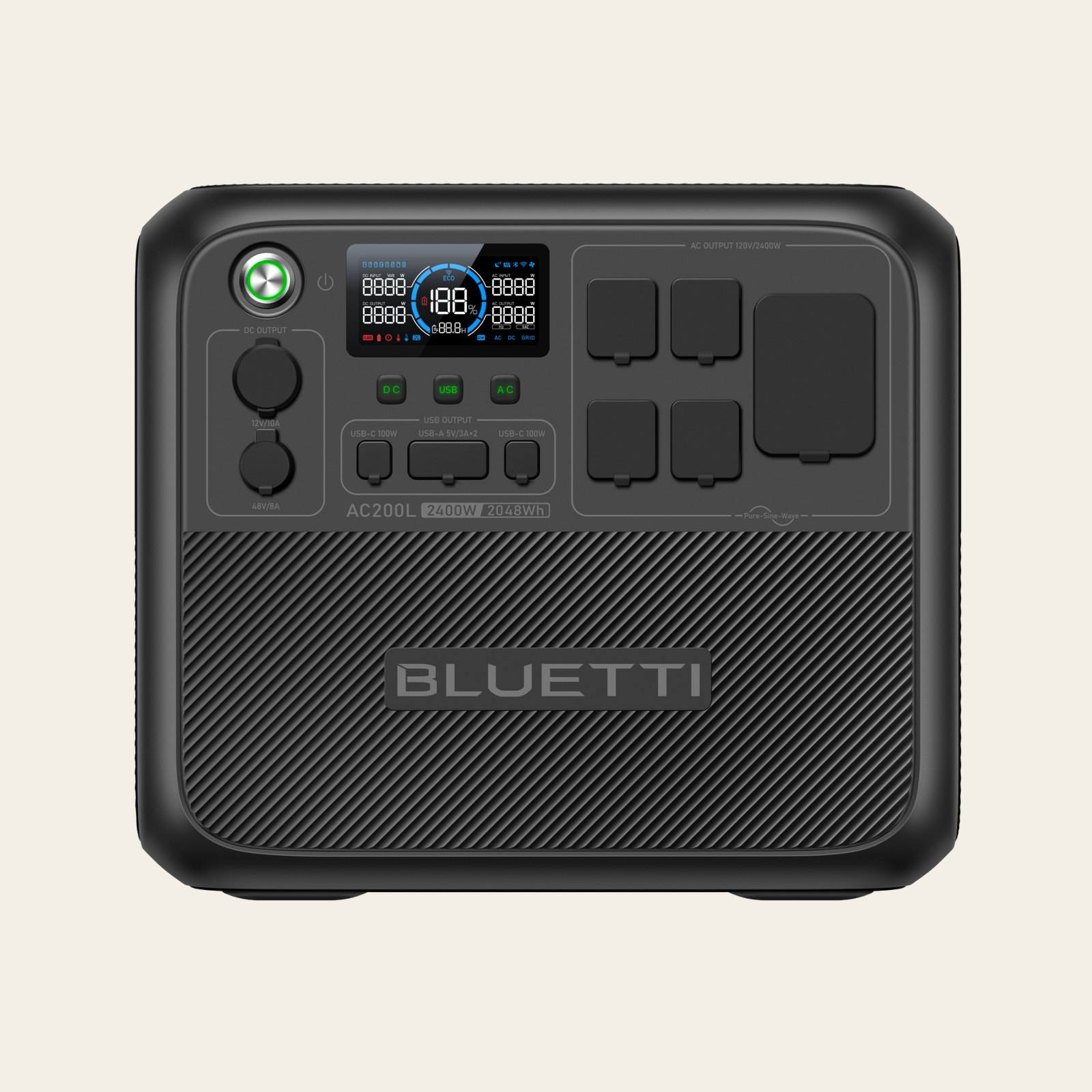
2,048 Wh · 2,400 W · LiFePO4
$899
Price checked Sep 30, 2026
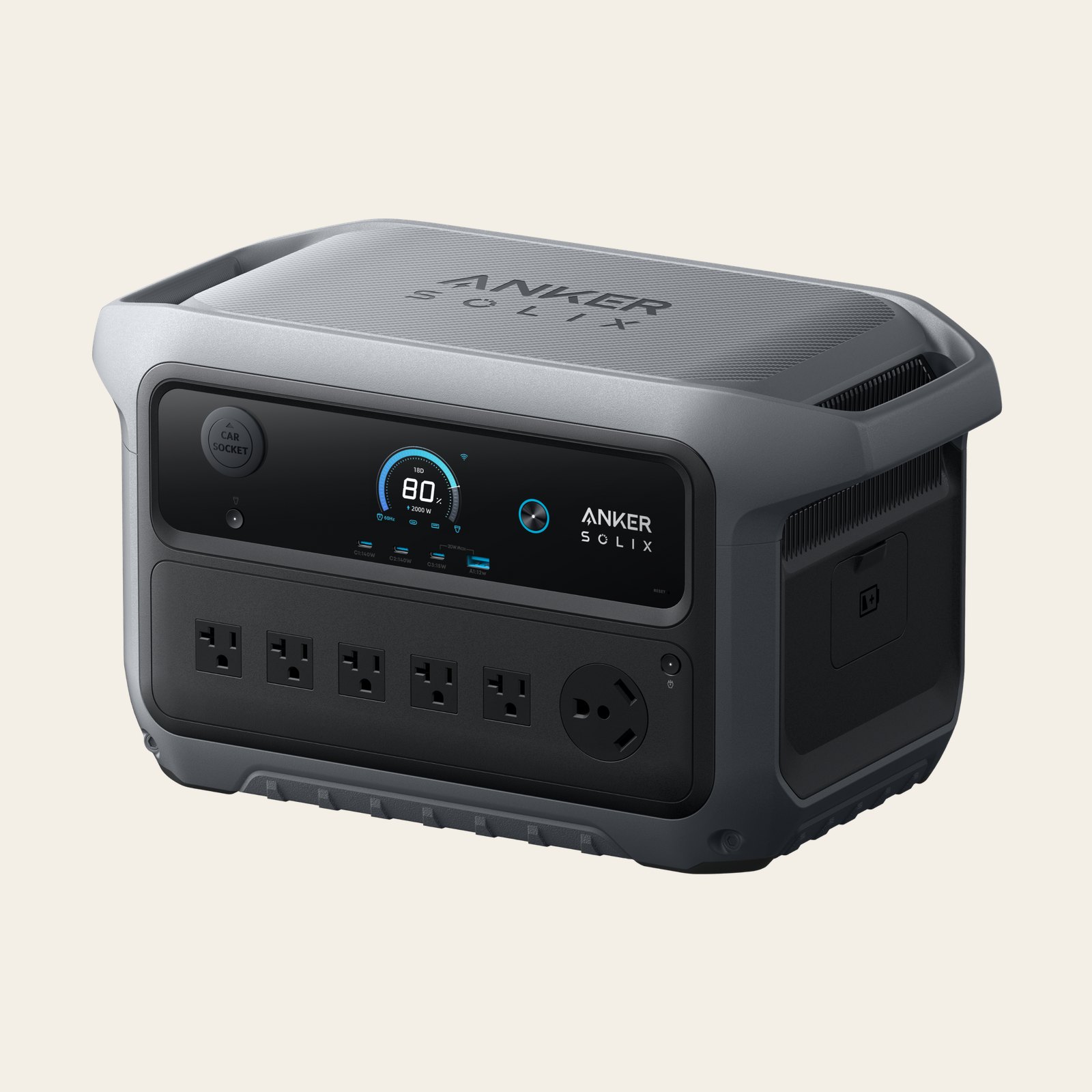
2,048 Wh · 2,400 W · LFP
$899.99
Price checked Sep 30, 2026
Product photographs are the manufacturers’ own studio shots, used as supplied. Specifications and prices come from their US product pages, checked September 30, 2026.
All three are ~2,048 Wh and 120 V, so on day one the tanks are the same size. What actually changes your math:
Featured hops: Jackery, BLUETTI, Anker SOLIX. Same price to you if a commission is paid. Disclosure.
This guide is decision content built from maker specs and closed-door math. It is not a hands-on lab log. Example products named for illustration use /go hops where buy-intent appears. disclosure · how we review.
This page is a method, not a permit. Nobody here has measured your fridge, and nobody here will invent surge watts, solar input windows, or charge times missing from the dated manufacturer snapshot. Confirm live specs. Corrections: contact. Privacy: privacy.
Tonight’s homework is the fridge nameplate, or a clamp meter on a calm afternoon. Write running watts and a guessed start spike. That scrap of paper is the whole buying guide, applied. Next: best stations · home backup use · silo hub