
Best for 240 volts
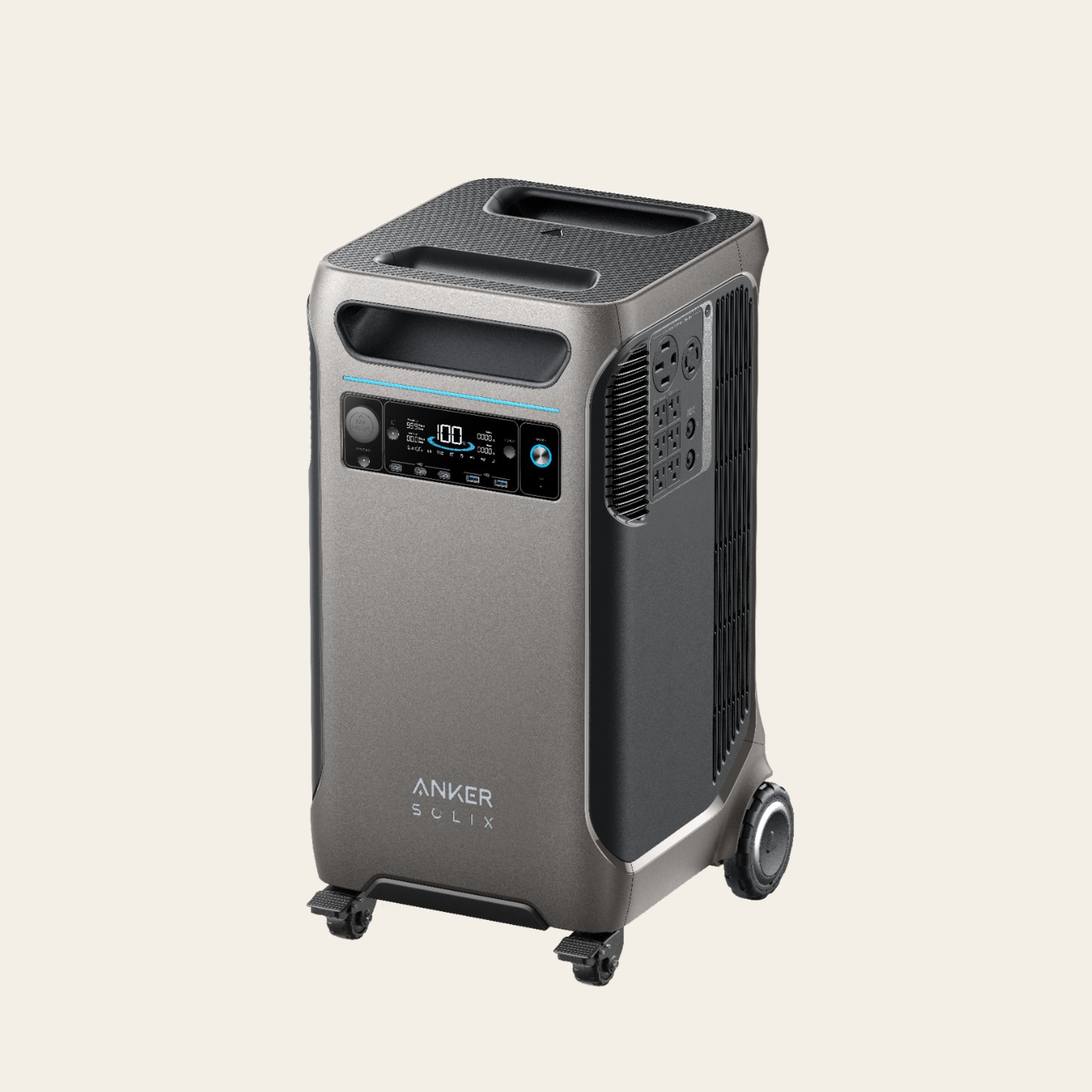
Anker SOLIX F3800
3,840 Wh · 6,000 W · LFP
$2,199.98
Price checked Aug 26, 2026
Expandable is a voltage story first and a watt-hour story second. One column on the spec sheet disqualifies machines outright, and that column is voltage. These are the three kits worth growing: one that speaks 240 volts for the well-pump houses, and two 120-volt machines for everyone else. No Powerwall, no pad machine in a battery costume.

Method: how we pick · disclosure. Spec-based unless a photo of the unit in our hands is shown.
Read the voltage column before any other column. It is the only one that can end a purchase in one glance, and starting there saves the most money in this category. (“Best home battery” searches mostly return roof-tied storage systems, which are a different product with an installer and often a solar contract attached. Here, a home battery is a kit you order, roll onto a dry floor, and grow when the first outage teaches you what 2 kWh really is.)
Three kits earn cards. The Anker SOLIX F3800 is the 240-volt pick, for the houses where the well or the dryer votes. The BLUETTI AC200L and Jackery Explorer 2000 Plus are 120-volt machines that grow. There is no single trophy, because a well pump and a refrigerator are different jobs.
The fuller rubric lives at how we work. Short version: printed ratings read closely, buyer failure modes taken seriously, and no claims about winters we didn’t spend with these machines.
3,840 Wh · 6,000 W · LFP
$2,199.98
Price checked Aug 26, 2026
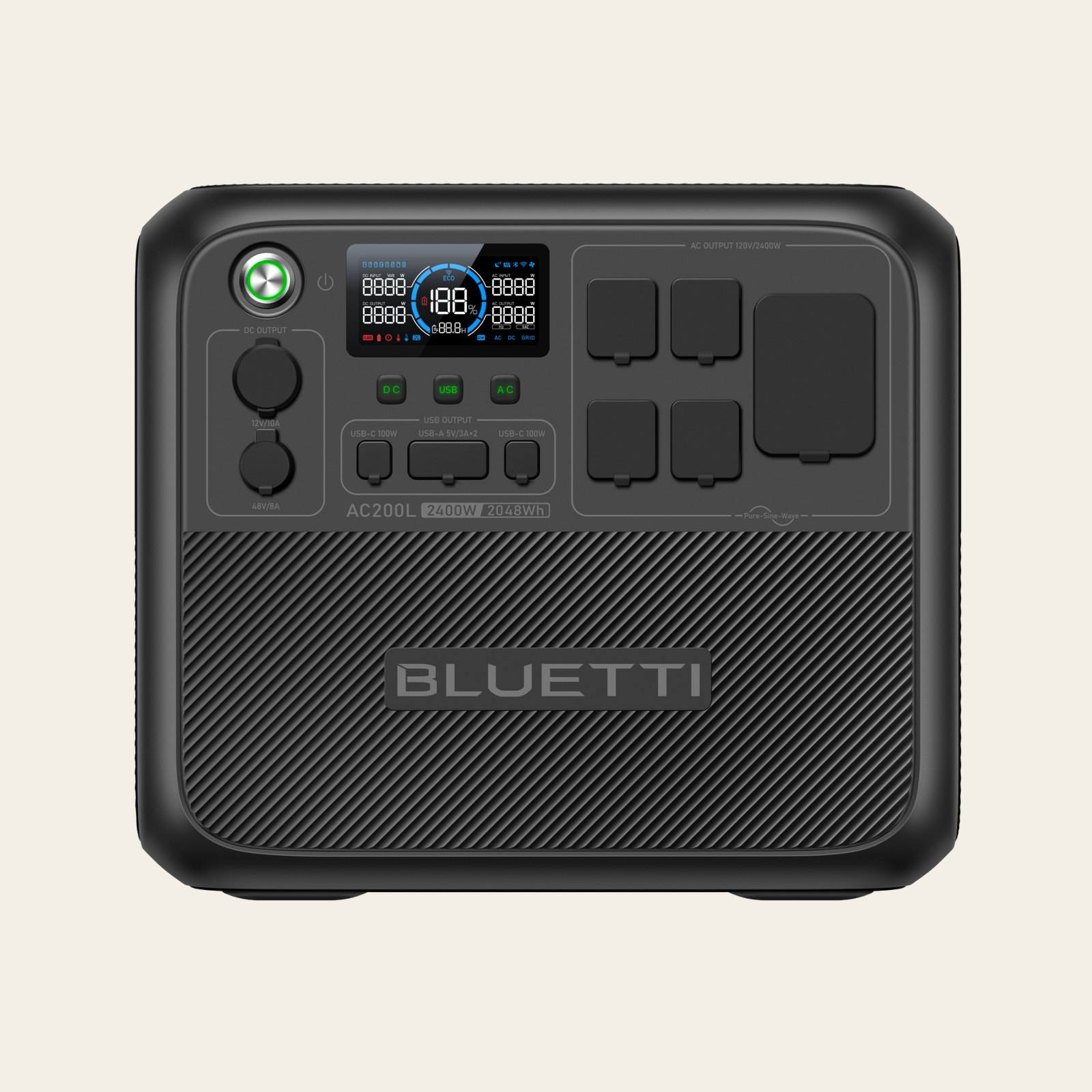
2,048 Wh · 2,400 W · LiFePO4
$899
Price checked Sep 30, 2026
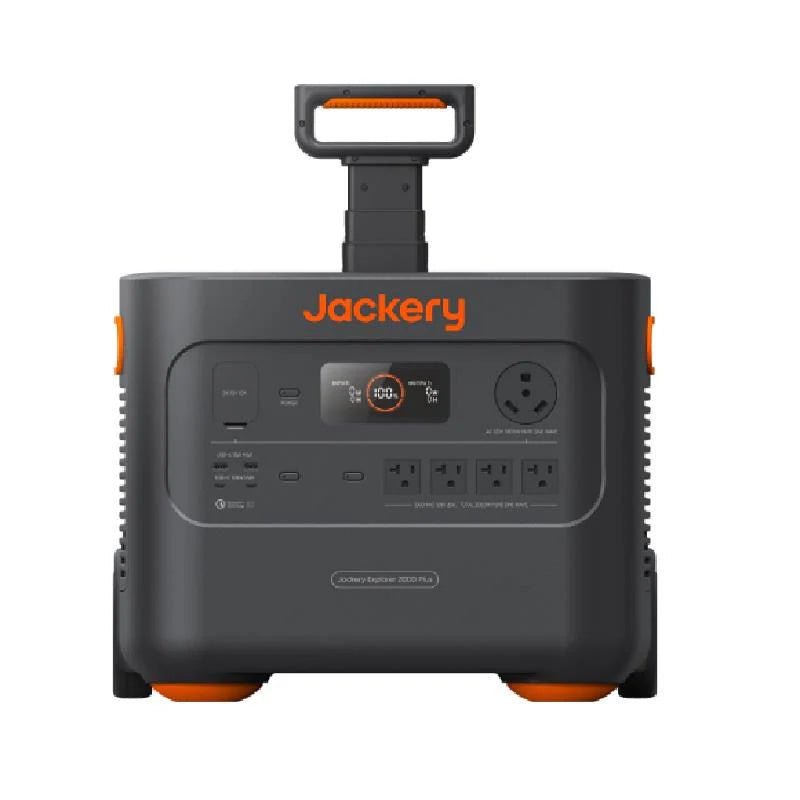
2,042.8 Wh · 3,000 W · LiFePO4
$1,429 kit (out of stock)
Price checked Sep 30, 2026
Photographs are the manufacturers’ own studio shots, used as supplied. Specs checked August 26, 2026.
Voltage before price, always: the F3800 costs more because it is a different inverter class. The two 120-volt machines no longer share a sticker (Jackery $1,429 for the kit with two SolarSaga 100W mini panels on September 30, 2026, out of stock on jackery.com with no standalone unit listed; BLUETTI $899 on shop.bluettipower.com, main site Discontinued / unavailable) and differ everywhere that matters: output, growth maps, and the panel family you’re marrying.
| The machine | Holds | Steady output | Surge | Voltage | Weight | Room to grow | Price that day |
|---|---|---|---|---|---|---|---|
| Anker SOLIX F3800the 240-volt one |
3,840 Wh | 6,000 W | 9,000 W | 120 / 240 V | 132.3 lb | Yes | $2,199.98 |
| BLUETTI AC200L |
2,048 Wh | 2,400 W | 120 V | 62.4 lb | Up to 8,192 Wh | $899 | |
| Jackery Explorer 2000 Plus |
2,042.8 Wh | 3,000 W | 120 V | 61.5 lb | Battery Pack 2000 Plus | $1,429 kit (out of stock) |
About those blank cells: the AC200L and Explorer pages never settle on one surge figure, so we don’t either. Start your own compressor before trusting a forum’s number. Owners keep saying a kitchen fridge starts on both 120-volt cores; the well pump conversation belongs only to the F3800. The deep dive on the big cabinet: the F3800 notes.
Choose it when at least one load you refuse to lose runs on 240 volts: a well, a dryer that earns its keep, a split-phase inlet in the plan. Anker’s listed muscle is 6,000 watts steady and 9,000 surge, the tank is 3,840 Wh (a few kilowatts of space heater still empties any tank), and the weight is 132.3 pounds on casters that love flat floors and refuse stairs. Spec sheet says 120/240 V, 6,000 W, 9,000 W surge, checked August 26, 2026.
Expandable means more stored hours later. It never means the inverter turns into a 20 kW plant. Houses that must run like the grid for days, heat pumps included, belong in the engine category. See tonight’s price at Anker →
Choose it when every essential is 120-volt and the published growth map is the point: 2,048 Wh and 2,400 watts today, a printed path to 8,192 Wh tomorrow. That is the biggest quiet attic in this category, which is exactly why it appears here and not just with the stations. Weight is a park-it 62.4 pounds. Surge is a blank cell, same rule. Panels come from the solar category, and its matched folder prints its voltage plainly, which makes the wiring homework doable by this category’s standards. See tonight’s price at BLUETTI →
Choose it when you want the friendliest ecosystem story: a named, orderable extra battery (Battery Pack 2000 Plus) and the lightest panel carry in our catalog waiting to pair with it. As listed: 2,042.8 Wh, a class-leading 3,000 watts steady, 61.5 pounds, $1,429 for the kit (Explorer 2000 Plus + two SolarSaga 100W mini panels), checked September 30, 2026. Out of stock on jackery.com that day; no standalone unit is listed. Surge, a blank cell. Same rule. Extra packs stretch a 120-volt outage generously and start exactly zero well pumps. The full story lives with the stations: the notes · the matched panel: SolarSaga 200W. See Jackery Explorer 2000 Plus kit on Jackery.com (check restock) →
How we know: Specification analysis. "Best" is voltage- and job-scoped, not a universal trophy.
Price check: anker-solix-f3800: $2,199.98 (checked 2026-08-26); bluetti-ac200l: $899 (checked 2026-09-30); jackery-explorer-2000-plus: $1,429 kit, out of stock (checked 2026-09-30) (2026-08-26) — from merchant page / products.json; may change.
Limits: We did not run a hands-on lab on these units. Surge blanks stay blank where the maker never prints one clean figure. EcoFlow stays comparison-only (no hop). Disclosure mode is dormant — we do not claim commissions.
Growing a kit and filling a kit are different chores. Wall power recovers the tank whenever the grid flickers back. Daylight panels recover it when the grid truly leaves. Stay in the family: SolarSaga with Jackery, SP200L with BLUETTI, PS400 with Anker. Then check the panel voltage against the station’s input before any series wiring (the SP200L prints 24.6 V, and the other two cells are blank, which means go read the live page). The rules: the panel buying guide.
Then rehearse, once, in daylight: start the fridge, verify the interlock while the electrician’s still reachable, and label the stays-off list right on the cabinet so nobody dries a load of towels “just this once.” Firmware and module stock will wander over the years. The inverter’s voltage never will.
One machine deliberately absent: the Anker C2000 Gen 2, the light 41.7-pound station in the portable category. Honest 4 kWh ceiling, and not this page’s job. If weight rules your house and every load is 120-volt, go read about it there.
Figures below are from the makers’ own US pages (Wh and named modules). Cost-per-added-kWh uses the base street prices already dated on this page and assumes one expansion step to the printed ceiling where the maker names it. Where the maker does not print a max Wh or a module price, the cell stays blank — we do not invent one.
| Kit | Base Wh | Printed max Wh | Chemistry | Named module | Notes on $/added kWh |
|---|---|---|---|---|---|
| Anker SOLIX F3800 | 3,840 | LiFePO4 | Expansion claimed; module SKU/price not cleanly printed on the dated check | Blank — no clean module price to divide | |
| BLUETTI AC200L | 2,048 | 8,192 | LiFePO4 | B300 / B300K family (maker growth map) | Use live module sticker ÷ ~6.1 kWh added; do not trust a stale cart |
| Jackery Explorer 2000 Plus | 2,042.8 | LiFePO4 | Battery Pack 2000 Plus (named, orderable) | Roughly one pack ≈ one more ~2 kWh; divide live pack price by 2.0 |
Worked example before you stack: size tonight with the load calculator, then check a closed-door fridge night on fridge runtime. Expandable stores hours. It does not invent a missing 240-volt leg.
A required 240-volt load makes the F3800 the only kit here. An all-120-volt list makes either 120-volt machine the buy: growth map or stronger inverter, your call, and both are good. Outages measured in days with HVAC attached remove all three and send you to the engine category — start at best standby generators.
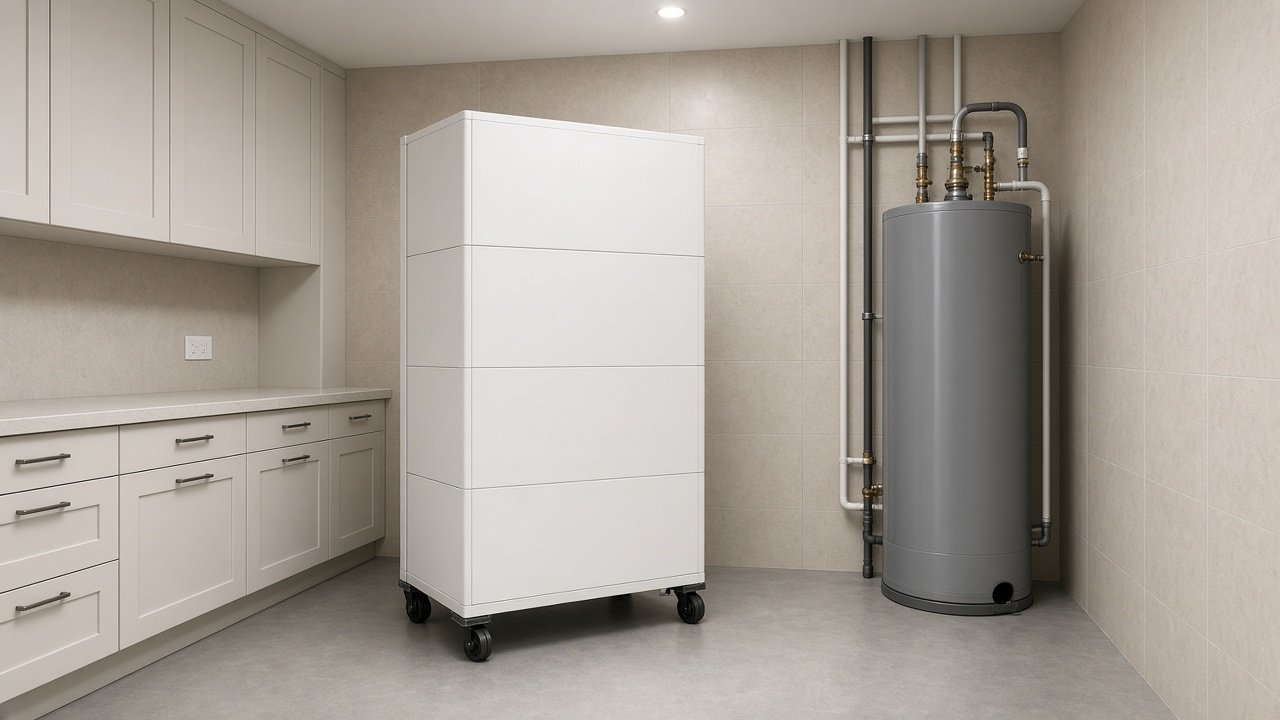
This page is spec-based. We did not run a hands-on lab on the Anker SOLIX F3800, BLUETTI AC200L, or Jackery Explorer 2000 Plus. Wh, continuous watts, surge (when printed cleanly), weight, voltage, and expansion claims come from the makers’ own US product pages on the dates next to each price. Lead photo is a real utility-room shot, not an SVG product fake. Affiliate hops stay dormant until a program is approved — disclosure · how we review.
Any of these three can be the right cart the month you buy. Firmware and module stock have moods. There’s no invented generator link rounding out the table. The homework: the buying guide.
The portable-category cousin list: the stations we’d buy · corrections, always welcome: contact.