
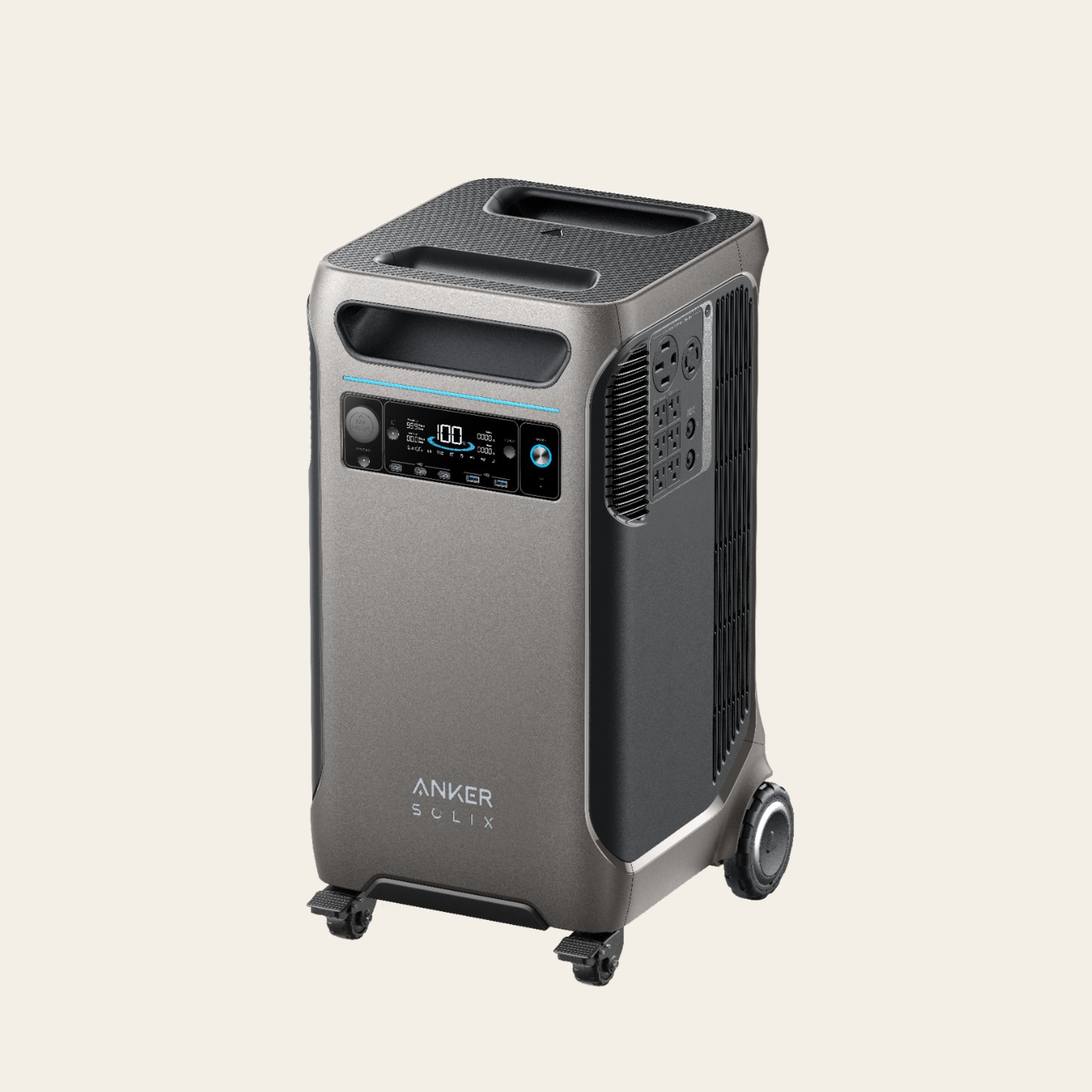
Best for 240 volts
Anker SOLIX F3800
3,840 Wh · 6,000 W · LFP
$2,199.98
Price checked Aug 26, 2026
Home battery marketing leads with capacity. Houses fail somewhere else entirely: on voltage, on surge, on the transfer switch nobody budgeted for, and on how the watt-hours get put back. So here is the order of operations for the kits we actually name.


The fork that saves the most money in this silo is 120 volts versus 240 volts, and it happens at the breaker panel, not in a shopping cart. Specs in this guide are dated August 26, 2026, and street prices move. The blank surge cells on the two 120 V cores stay blank, because the manufacturer pages conflicted and we won’t guess on your behalf.
Take a notepad to the breaker panel and walk the house like it is night three. Lights are cheap in watts and do not decide anything. The deciders are the refrigerator, the well or booster pump, the sump, the furnace air handler, the CPAP or the insulin fridge, and anything you plan to heat with. Write nameplate watts where you can read them. For the fridge, a clamp meter during a compressor start is better than a brochure, but a conservative guess plus a check before the storm is the minimum.
Now sort the list into must, nice, and off. Off should include the range, the dryer, and most resistance heat unless you have a generator-sized plan, because a 3,840 Wh F3800 running a 1,500 W space heater is an evening, not a weekend. Extra batteries stretch the must-list hours. They do not make the nice-list free.
For scale: a fridge that is already cold pulls somewhere around 150 to 250 W while it cycles, with a short surge several times that at each compressor start. A microwave is a quick 1,000-watt punch. The modem and the Wi-Fi are small and worth protecting, because an outage with a working group chat is a different outage entirely. CPAPs are often happier on DC, so check yours. None of these numbers replace the nameplates in your own kitchen.
If the must-list is only a fridge, modem, and phones, you may not need this silo at all. Start at the power station buying guide. If the must-list is the whole heating and cooling plant for days, start at the whole-house generator buying guide.
Open the panel and look: a double-pole breaker, the kind two switches wide, is your hint that a load wants 240 volts, both legs of the house’s power at once. Wells, many dryers, and many air handlers live there. A 120 V core cannot feed them, and no amount of stacking changes that: BLUETTI modules climbing toward 8,192 Wh are still 120 V, and a Jackery Battery Pack 2000 Plus added on is still 120 V. Extra watt-hours buy hours. They never buy the missing leg.
On this desk, split-phase (the 240-volt kind) means the Anker SOLIX F3800: 120/240 V, 6,000 W continuous, 9,000 W surge, 3,840 Wh, 132.3 lb, LFP, expandable yes, $2,199.98 on August 26, 2026. The 120 V cores are the BLUETTI AC200L (2,048 Wh, 2,400 W, 62.4 lb, $899 on shop.bluettipower.com; main bluettipower.com product page lists Discontinued / unavailable) and the Jackery Explorer 2000 Plus (2,042.8 Wh, 3,000 W, 61.5 lb, $1,429 kit with two SolarSaga 100W mini panels; out of stock on jackery.com, no standalone unit listed, checked September 30, 2026). Spec sheet says those figures, checked August 26, 2026. The full write-ups: F3800, AC200L, Explorer 2000 Plus.
About those blank surge cells on the two cores: we left them blank on purpose, and you should not fill them in from a forum screenshot. Check the live manufacturer page against your compressor before you count on it. Owners keep saying a kitchen fridge starts on both cores. The F3800’s 9,000 W surge is listed, and even so, confirm your well pump’s starting draw against it rather than assuming the motor will be polite.
Extension cords are honest, and there is no shame in them. But they also trip people in hallways, overload cheap power strips, and leave you running a fridge in the dark with the cord holding the door ajar. When you want the wall circuits themselves to stay live, pay for a listed path:
The F3800’s whole reason to exist is that split-phase house hook, and hooking it up is electrician work in almost every US jurisdiction. The 120 V cores can also feed an inlet on a critical-loads subset if the electrician designs it that way. They still will not conjure the missing 240 V leg. Budget the visit before you budget a second battery pack, and know this going in: a legal interconnect on a 120-volt core can cost as much as the core. That does not make it a bad machine. It makes the install the product, which is worth knowing before the invoice, not after.
Prefer lithium iron phosphate (you will see it labeled LiFePO4 or LFP) for home-backup cycling unless you have a specific reason not to. All three named kits here use that chemistry family: Jackery lists LiFePO4 on the Explorer 2000 Plus, and Anker lists LFP on the F3800. We quote nameplate watt-hours because that is what the cart shows, and we keep runtime talk conservative. Do not plan on draining to zero, and do not treat cycle-life marketing as a warranty substitute.
And remember what chemistry cannot do. It does not fix voltage. It does not stand in for a missing transfer switch. What it does is tolerate being cycled through flickers instead of sulking on a shelf for five years. Storage still wants a dry floor, the manufacturer’s temperature limits, and a periodic top-up. A basement that floods is a bad home for any of these cabinets. The F3800’s casters are for flat concrete, not standing water.
Capacity without recharge is a single outage, spent once. Wall AC is the default recovery while the grid is flapping on and off. Read the charging rate on the live product page, because we’re not inventing inlet watts here. When the outage is long and the grid is truly gone, you need sun or an engine. Portable panels are silo 4 on this site. They are not a roof, and they know it.
Match the family cables when you can: SolarSaga into Jackery, SP200L into BLUETTI, PS400 into Anker SOLIX. The number that matters is open-circuit voltage, Voc, the panel’s cold-morning maximum: it must stay under the station’s solar input ceiling, with margin. We left Voc blank on the SolarSaga 200W and the PS400 because the manufacturer pages conflicted, and we did not invent a number. The SP200L lists 24.6 V. Still, check the series wiring before you stack panels. The rules live in the portable solar panel buying guide.
Night outages are a battery problem, full stop. Buying panels to “solve” a four-hour evening is how people overspend, and buying no recharge path at all before a three-day ice storm is how people meet the phrase finite watt-hours the hard way. If fuel-length runtime is the honest need, read battery vs standby.
Three worked examples, no trophies:
The must-list is the fridge, the network, some lights, and a CPAP, all 120 V, outages of hours. Either 120 V core is in class. Take the Explorer 2000 Plus if you want 3,000 W continuous and the Battery Pack 2000 Plus and SolarSaga path. Take the AC200L if the published climb toward 8,192 Wh is the point and you can live at 2,400 W continuous. Check the fridge surge yourself, and do not assume the blank surge cell hides a big number.
The must-list includes a 240 V well, or a split-phase inlet you already intend to install. That is the F3800, or a standby generator. The cores are the wrong category entirely. Read the F3800 notes for the honest weight and the 3,840 Wh tank. And when the well plus the heat pump must run for days with no sun, the engine path at whole-house generators is the grown-up answer.
The must-list is “the house as usual,” heating and cooling included. Then none of these kits is your machine. Expandable batteries still hit an inverter ceiling, and the F3800’s 6,000 W is a lot for a battery and not a lot for a 4-ton condenser. Shed the load, or go standby.
3,840 Wh · 6,000 W · LFP
$2,199.98
Price checked Aug 26, 2026
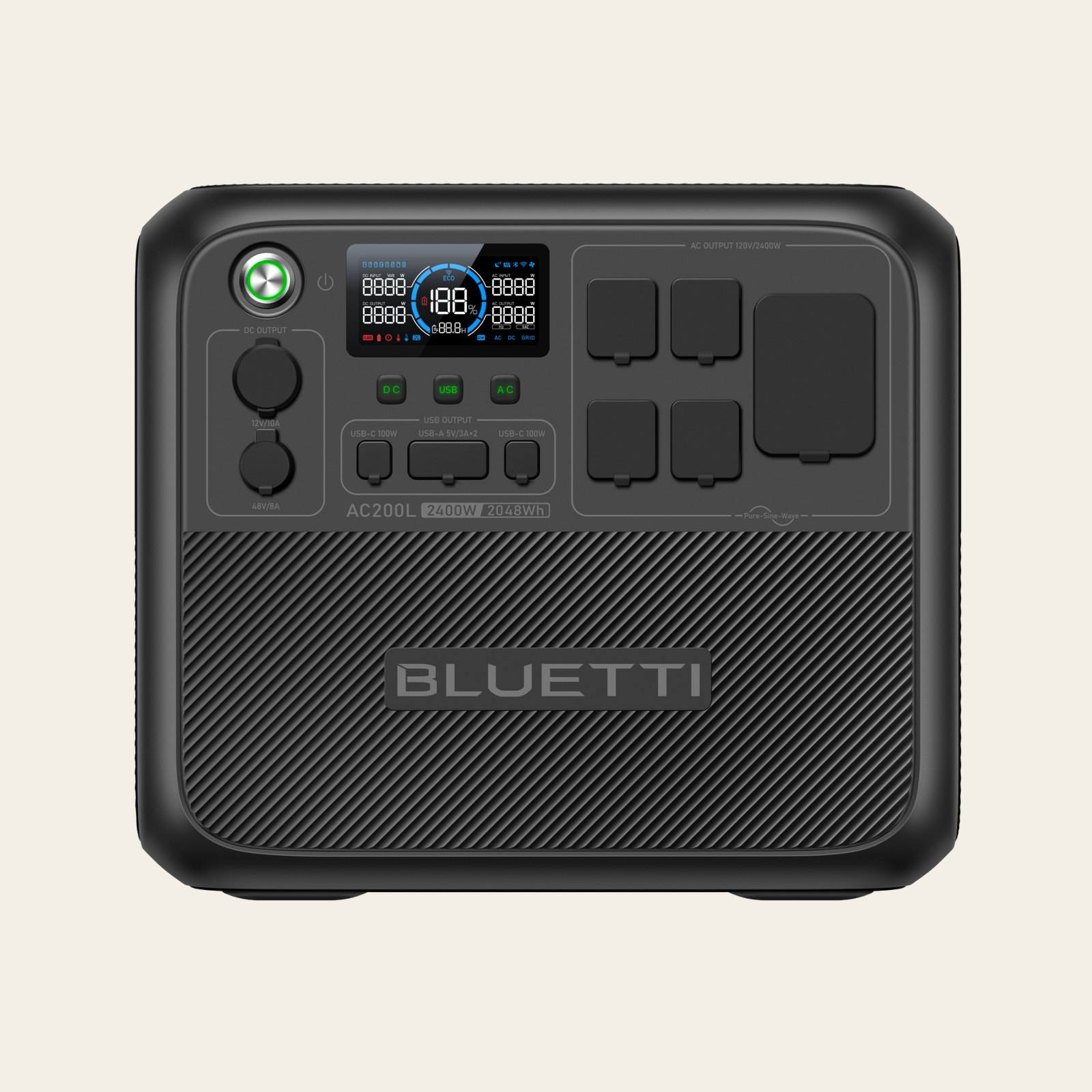
2,048 Wh · 2,400 W · LiFePO4
$899
Price checked Sep 30, 2026
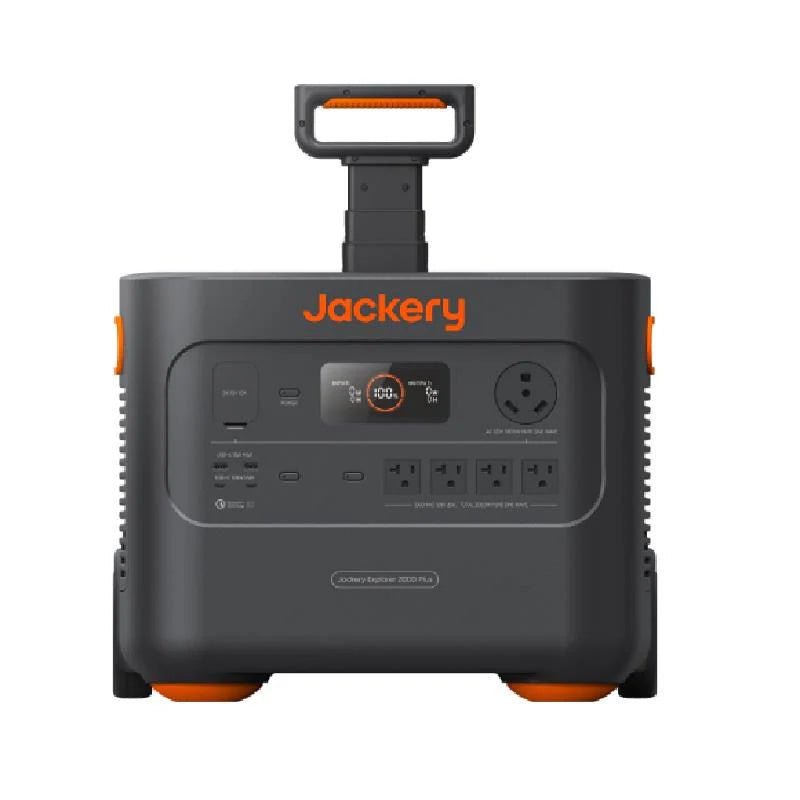
2,042.8 Wh · 3,000 W · LiFePO4
$1,429 kit (out of stock)
Price checked Sep 30, 2026
This is not electrical, permitting, or fire-code advice. Featured carts: Anker SOLIX when 240 V matters, BLUETTI when modular 120 V kWh fits, Jackery for a named extra pack and panel pair. Compare kits: best expandable home batteries. Disclosure.
Do one thing at the panel: write 120 or 240 next to every must-load on your list, then tape that list inside the panel door. Voltage is the column that ends purchases in this category. Method: how we work. Questions: contact.